Cassie Quinn and Coppermill Primary School make food waste fashionable
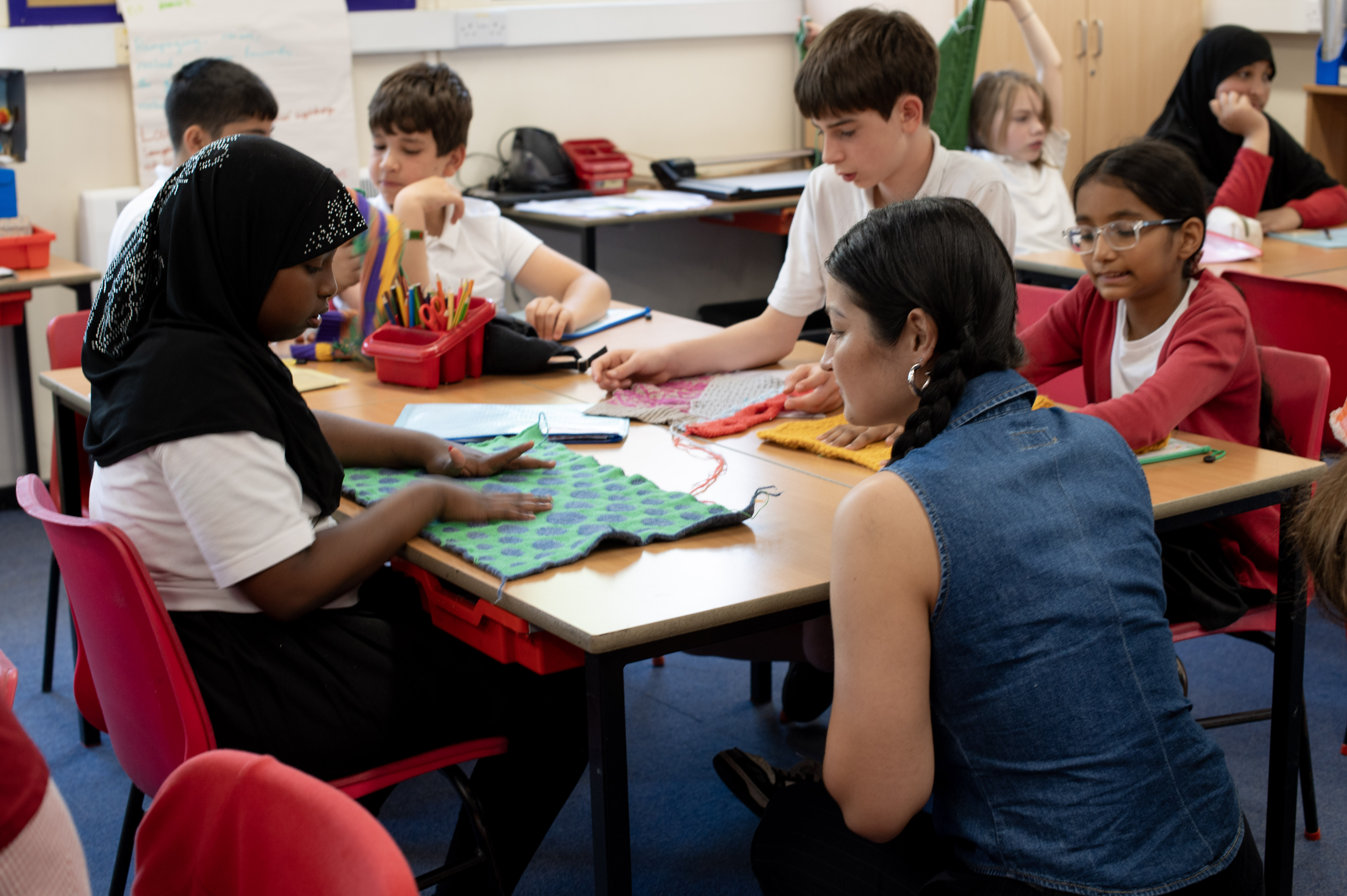
“I never would have thought of using seaweed for sequins” remarks one pupil in their focus group feedback. Not many people would, let alone 10- and 11-year-olds embarking on their first fashion project.
However, regenerative fashion designer Cassie Quinn knows all about making sequins from unlikely sources. Her fashion lab, CQ Studio, creates innovative biomaterials to use in their projects, with a vision not only to reduce the detrimental environmental impacts of the fashion industry, but also to actively improve and restore the environment by design.
And it wasn’t just seaweed sequins that children at Coppermill Primary School were learning about. Cassie’s workshops covered the fashion industry’s contribution to climate change and landfill waste, the differential decomposition rates of various textiles, and the ways that food waste can be converted into natural dyes, fibres and accessories. The Year 6 class was also taught practical skills, including screen printing, sewing, stencil-making and fibre-spinning.
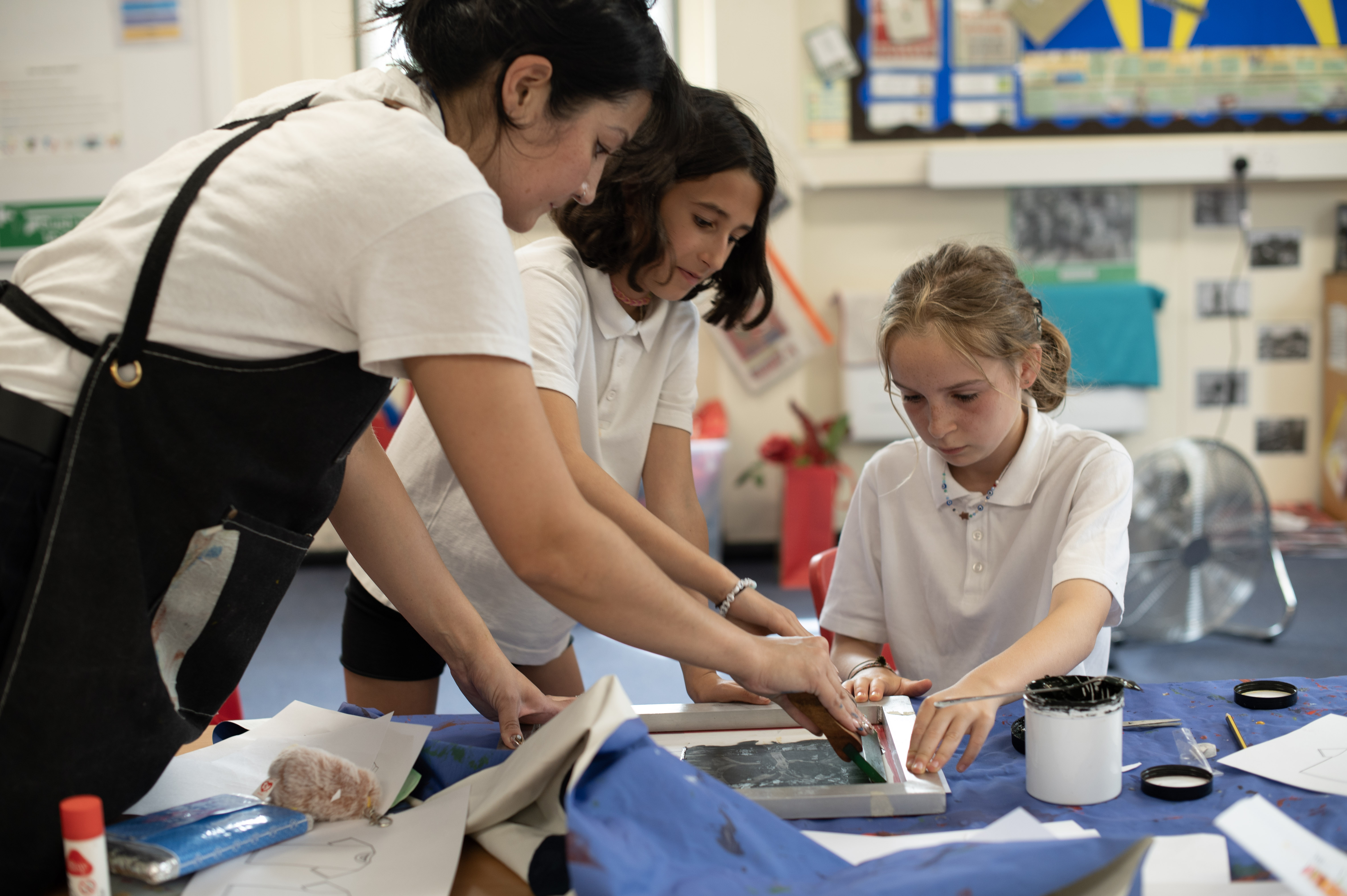
Cassie helps two children screen print using their hand-made stencil designs and natural dyes.
Equipped with their new knowledge and skills, the children were tasked with designing outfits made from food waste. Their group designs also had to feature an element that could transform their outfits from Spring to Autumn, meaning that their clothes could be worn across the year. The class produced brilliantly creative yet practical designs that incorporated banana fibre, potato buttons, pineapple denim, biodegradable laces, pink hibiscus dye and much more.
The winning group created an impressive design for a skirt that could transform into a pair of trousers through using button snaps. For their reveal event in East London, Cassie turned their design into a brilliant (bio)material reality, and the children were able to see, feel and try on their pineapple fibre convertible denim skirt/trousers in person. The skirt was decorated with sequins made from hibiscus-dyed fungi and Cassie printed algal dye onto pineapple fibre to give the illusion of denim.
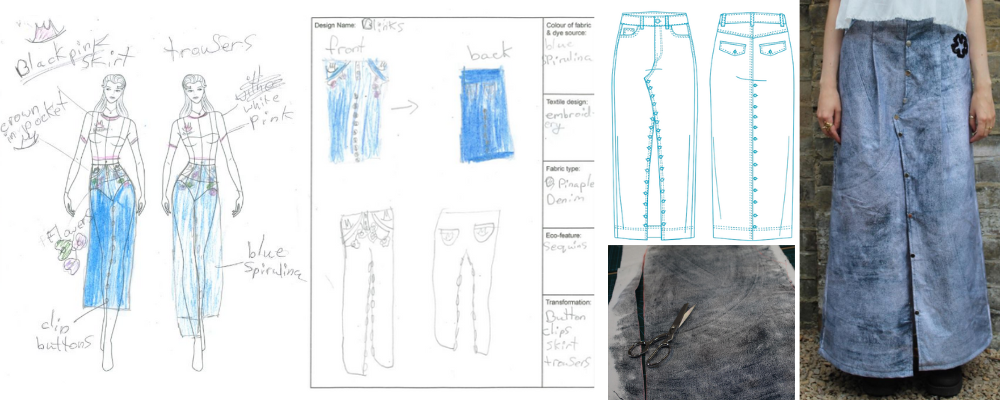
From left to right: the winning group’s designs, Cassie’s digital sketch, the pattern cutting process and the final co-design.
CCAC is thrilled with the outcome of this co-design collaboration and would like to thank the staff at Coppermill Primary School, Cassie and her colleagues for all their hard work in making the project a reality.
The CCAC Young Designer’s Award is kindly supported by The Linbury Trust and The Portal Trust. This co-design collaboration with Cassie Quinn, a recipient of the 2024-25 Award, was generously sponsored by The Linbury Trust.