When Global Climate Challenges can Feel Overwhelming, Great Ideas for a Resilient and Fruitful Future can be Shared
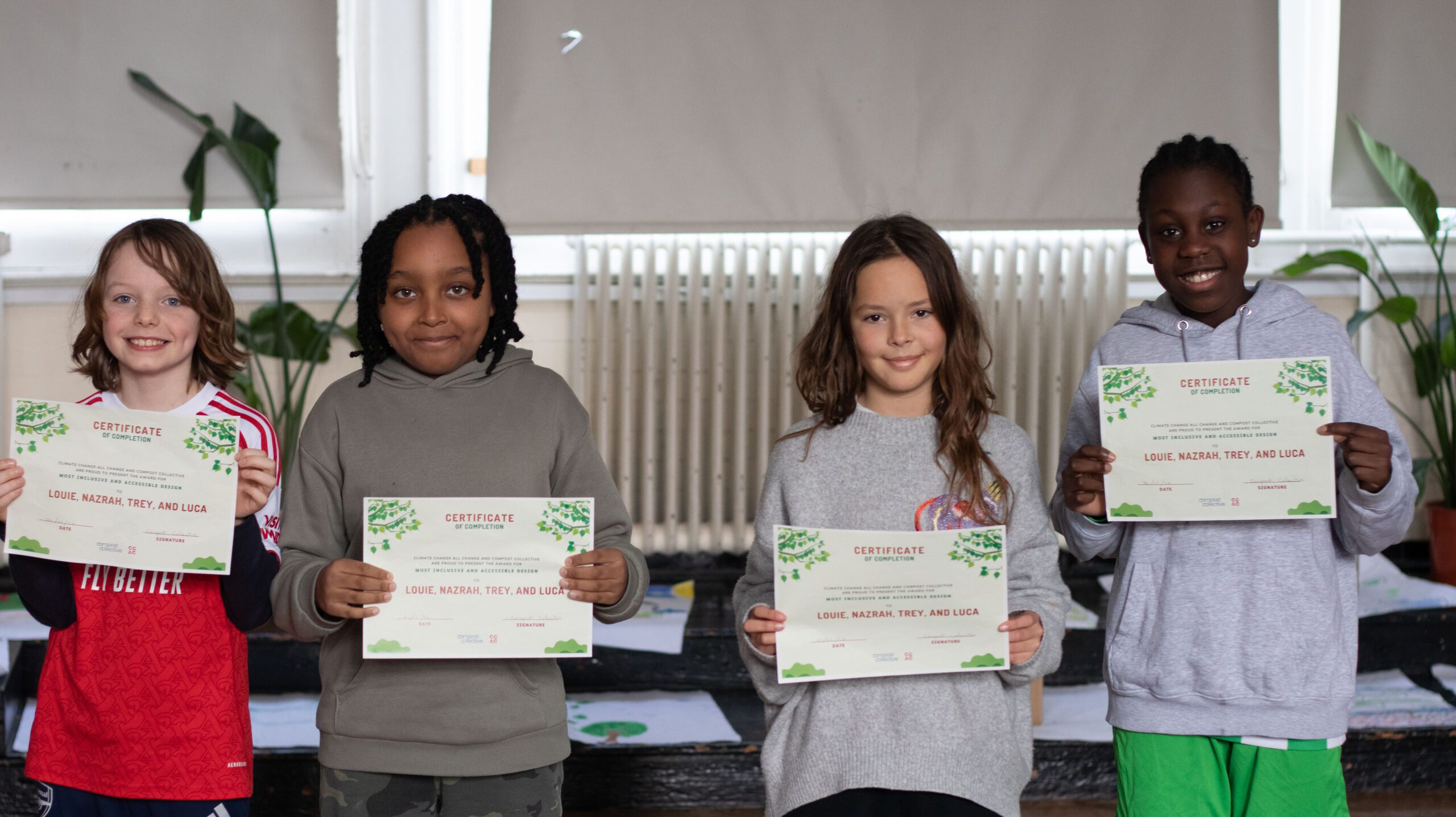
When global climate challenges can feel overwhelming, great ideas for a more resilient future can be shared with imaginative nine and ten-year-olds. This is what the Compost Collective, winners of CCAC’s 2025 Young Designer’s Award, have just completed with Year-5 children at Lyndhurst Primary School in the London borough of Southwark.
The Compost Collective asked the children “What if Lyndhurst became the heart of the community in 2050? How might we design a ‘Community Climate Hub’ that helps people grow food, stay safe, share resources, and care for the planet?” Every child was assigned a role within their design team:
The Ecologist: Tasked with understanding the biological health of the site and the needs of local flora and fauna.
The Hydro-engineer: Focused on water management, sustainable drainage, and the impact of rainfall in urban areas.
The Maker-engineer: Responsible for identifying regenerative materials and building the team’s design concepts.
The Social Designer: Dedicated to the community aspect, ensuring the designs were accessible, expressive, and served the people of Southwark.
“The thing I liked most was when we did the project and learned we should take care of the plants, the world, and the environment.” Lyndhurst year-5 pupil
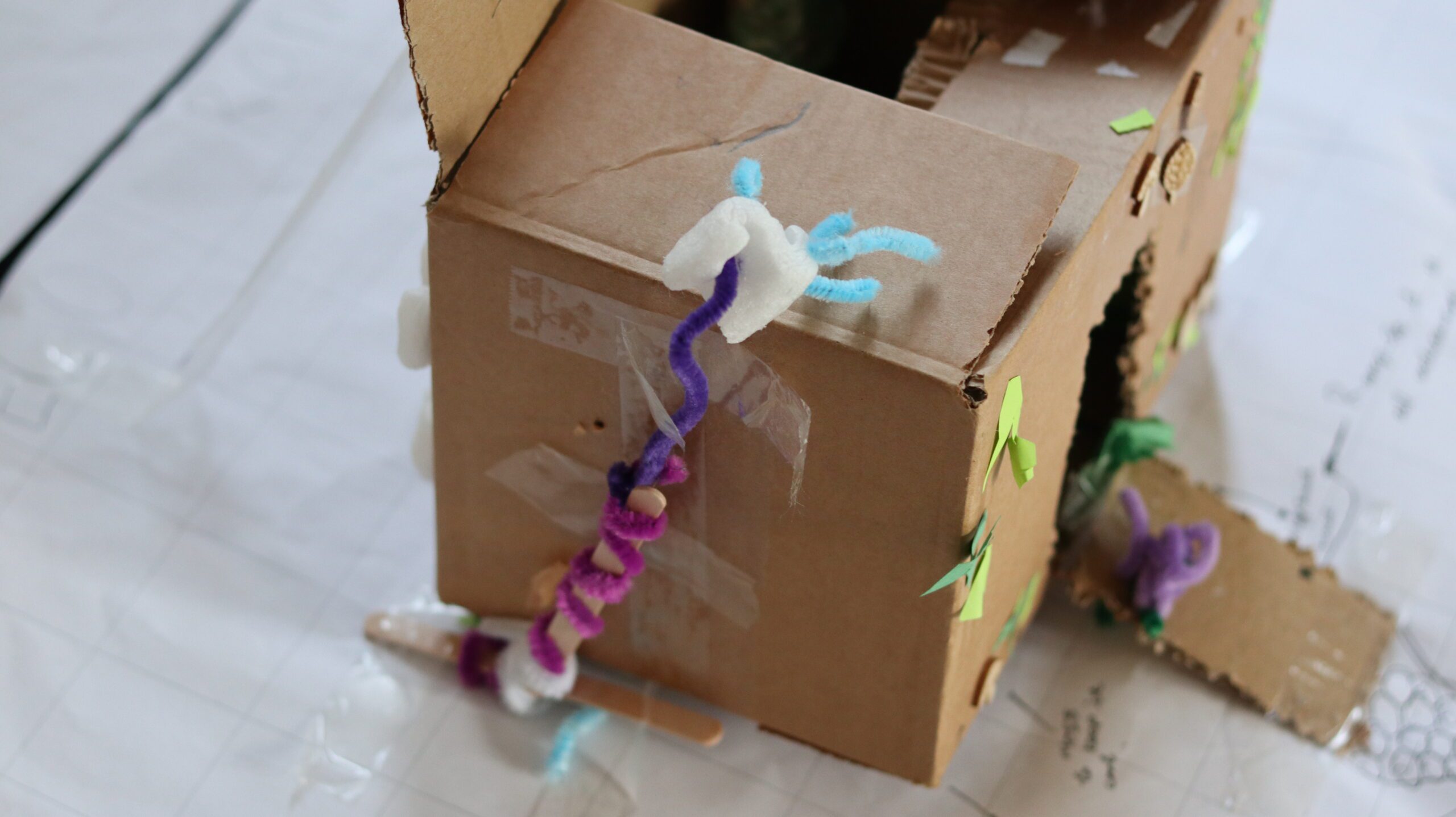
A Year-5 team’s 3D model of their greenhouse that uses pipe cleaners, cardboard and lollipop sticks.
Once the child teams’ design concepts were decided and drawn, it was time to start making models with pipe cleaners, cardboard and lollipop sticks to illustrate their new knowledge about how to tackle local climate challenges. The children displayed not only their creativity, but demonstrated they understood the role of planning, social values, future proofing, and adaptation for climate extremes. One child said: “I think people should have less screen-time…they should use their imagination to do stuff like this.”
Children’s Presentations
The Year-5 children stepped into the spotlight when they pitched their models and strategies to an expert panel. It was clear that they had understood the reasons for composting, rainwater harvesting and storage. They had incorporated renewable energy sources into their schemes and imagined crops of fruit and flowers in the school grounds irrigated by automated systems. They even spoke of the benefits of teamwork and displayed enjoyment of the design process: one said, “I loved everything and wanted more!”
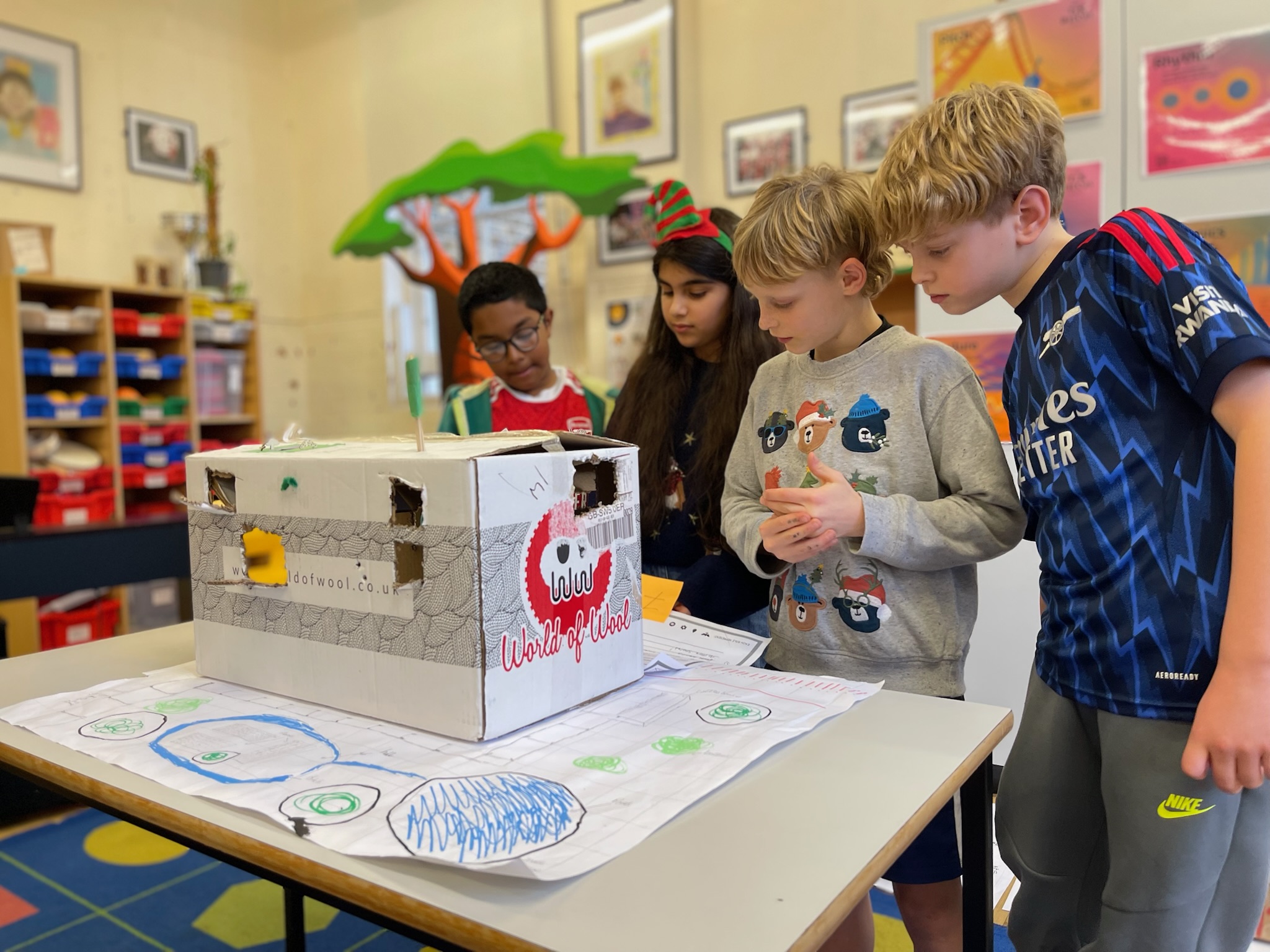
Year-5 group of children presenting their designs and ideas to a panel.
The Designers’ Reveal
Aly Tobin and Yoshimi Hata led the Designers’ reveal: the children were thrilled to see their concepts transformed into professional visualisations of how they imagined they would use “closed-loop systems” – where food, water and energy loops are integrated to mitigate climate extremes of heat, drought and heavy rainfall in the urban landscape – and their “water flow strategies” to combat flooding.
CCAC is grateful to Compost Collective for sharing their expertise and passion with Lyndhurst Primary School’s Year-5 teachers and children. The outcomes are original, exciting, and represent a meaningful engagement with the climate crisis.
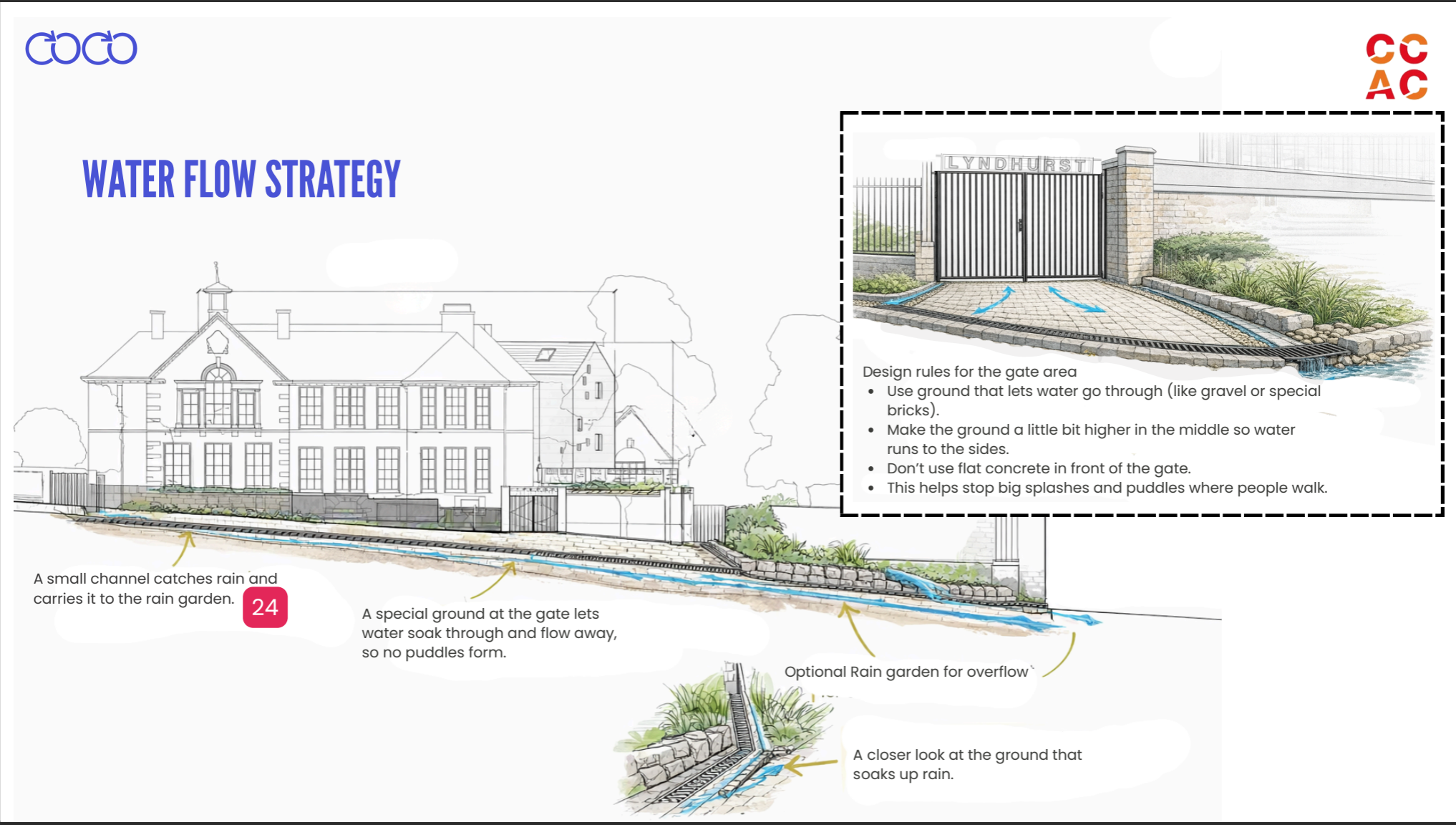
Compost Collective’s render of a water flow strategy system for Lyndhurst Primary School (Credit: Compost Collective)