Zaha Hadid Architects at William Tyndale Primary School: Retrofitting the New Quentin Blake Centre for Illustration
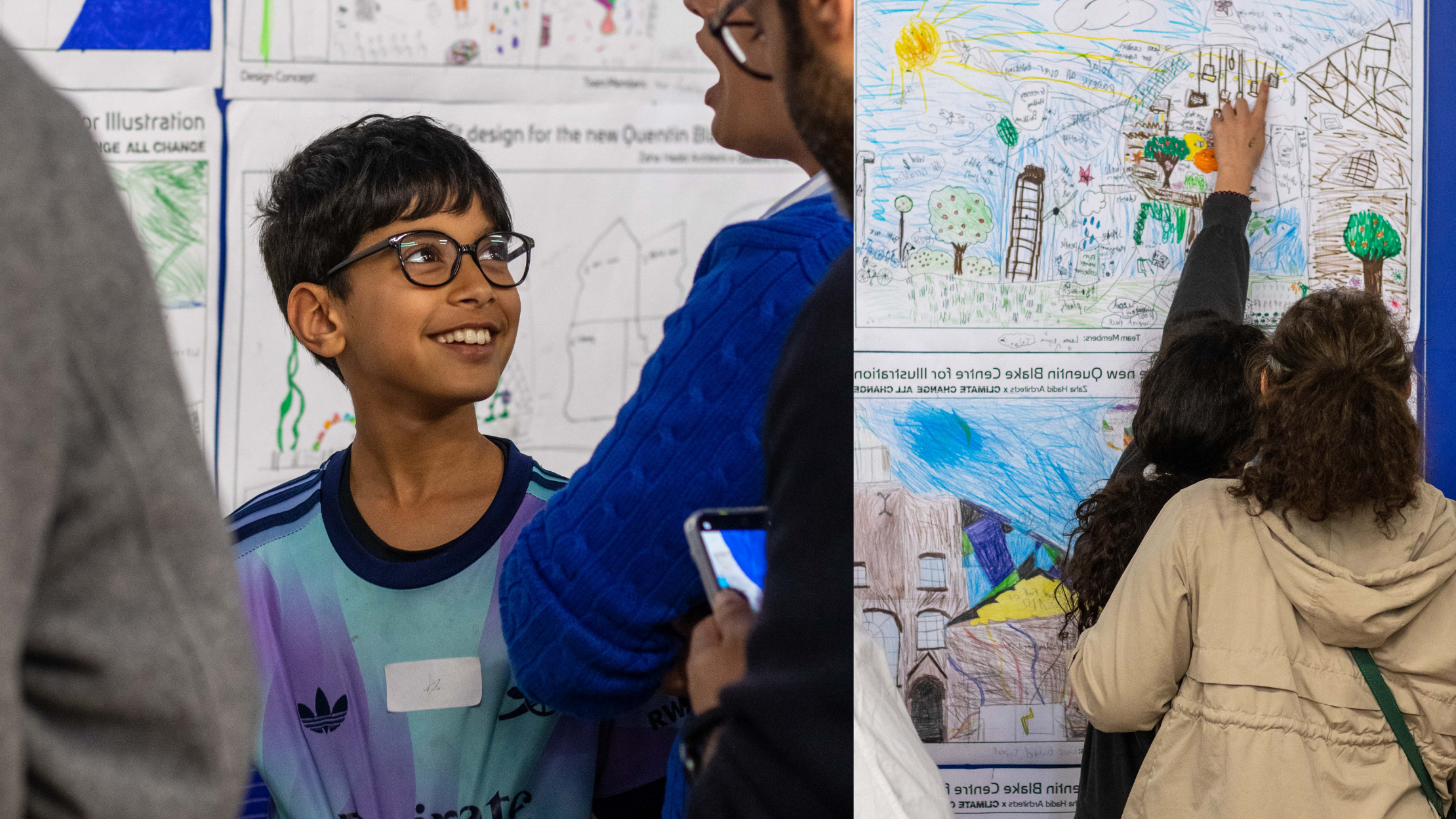
Zaha Hadid Architects (ZHA) recently embarked on their third co-design with Year 5 children at William Tyndale Primary School in Islington. Architects Angela Augelli Curci and Effie Nakajima led the project, setting a timely brief: Retrofit an Art Gallery for Floods and Heatwaves, based on the soon to be open Quentin Blake Centre for Illustration.
“What surprised me most was how easily the children started to connect design with the environment… By the final project, they were naturally thinking about sustainability as part of their designs, without being reminded.” – Angela Augelli Curci
At the outset, Effie and Angela introduced the core principles of sustainable architecture and how designers can mitigate risks in the face of a changing climate. The children explored the essential elements of “green” building – from materials’ lifecycles and water usage to renewable energy and waste management. This provided a unique opportunity for the students to see their earlier climate science lessons applied to a real-world context, whilst gaining an understanding of scale, elevation, and landscaping.
The Workshops
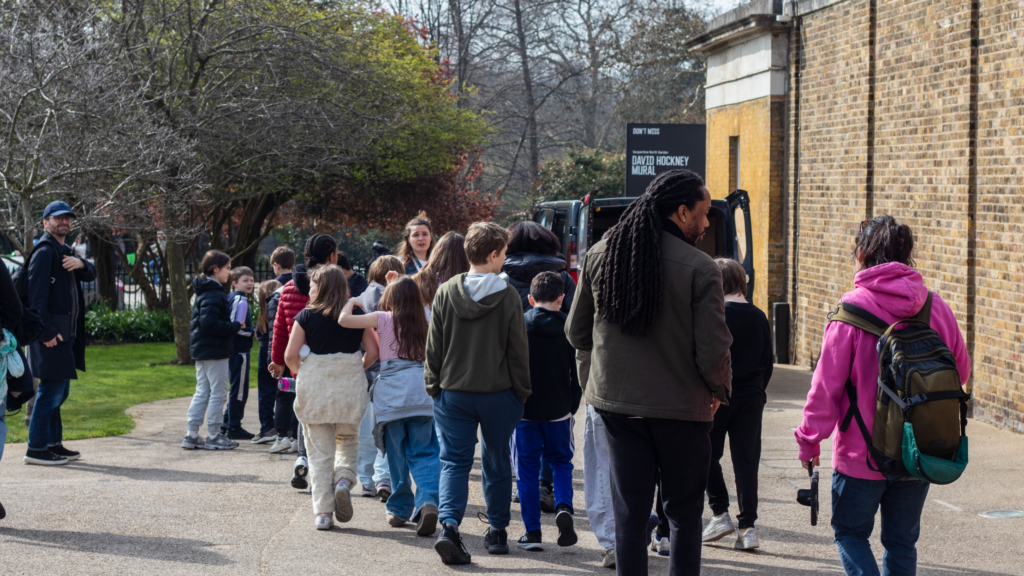
Children visit the Serpentine North with ZHA architects for field research
A key focus of the project was the concept of “retrofit” – the process of re-purposing, adapting and/or extending an existing building. The pupils learned that while building from scratch with recycled materials is an option, adapting existing structures is often the most sustainable choice, as it significantly reduces waste and energy consumption.
To make the project tangible, it was vital for the children to see a successful retrofit. Although nearby, the Quentin Blake Centre for Illustration was a construction site, so ZHA took sixty Year 5s to the Serpentine North Gallery in Kensington – one of ZHA’s dramatic retrofits. The trip allowed the children to see firsthand how contemporary design can coexist with an historic building.
Equipped with basic climate science, nascent architectural knowledge and an inspirational research trip, the 9-and-10-year-olds set to work as designers. Forming small teams, they began translating their ideas into detailed drawings.
Inspired by the Centre’s namesake, teams incorporated whimsical yet functional features, such as Matilda-themed library corners and a “James and the Giant Peach” dome. Managing to remain focused on the climate brief, many designs featured solar panels for renewable energy, accessible lifts for inclusivity, and an extension raised on stilts to avoid flooding.
The project culminated in formal presentations by the child-teams to explain to a panel of experts their design choices. They spoke with remarkable confidence in response to the experts’ questions about sustainability and spatial planning.
The Reveal
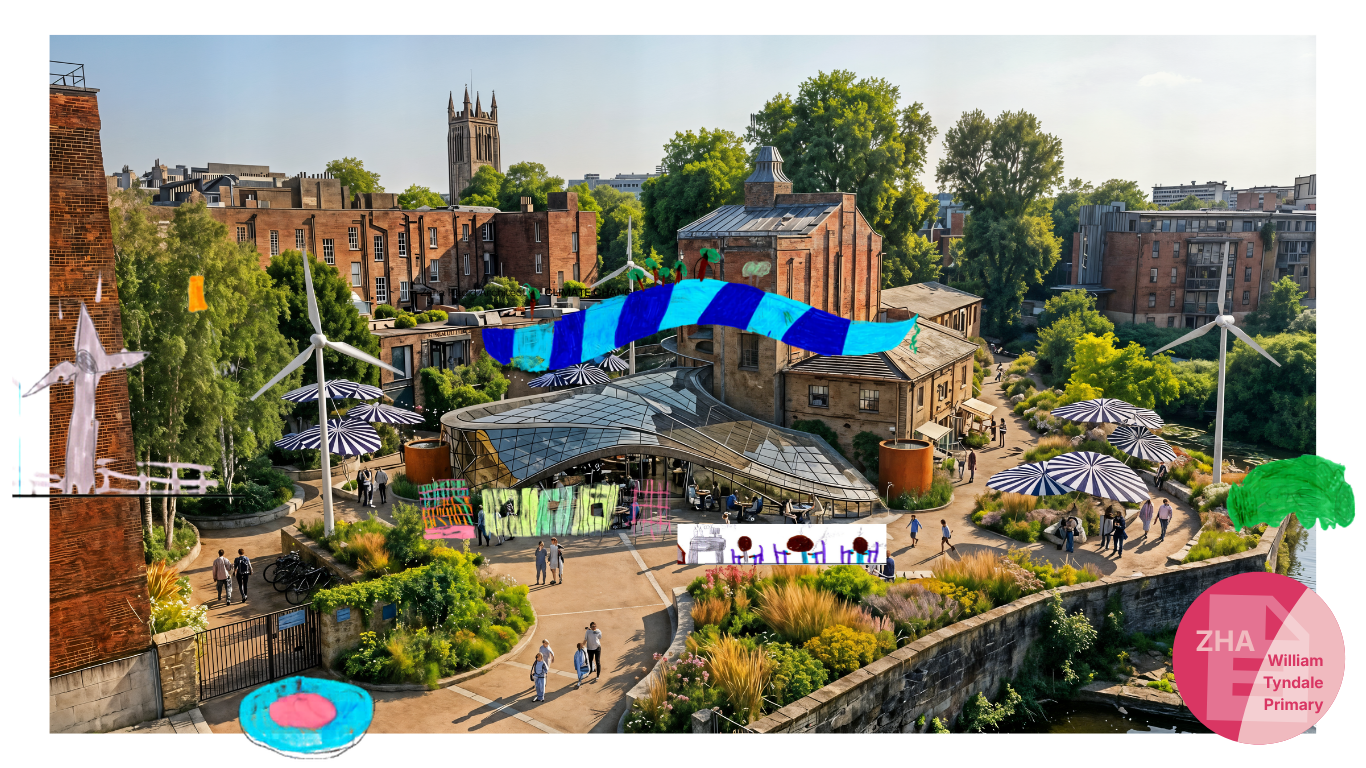
The overall winner’s design rendered by ZHA architects with children’s design elements overlayed
Following the children’s presentations, Effie, Angela and ZHA colleagues interpreted the children’s concepts, using AI software to aid the visualisation process. Angela and Effie returned to school to show the children and their families the results. Year 5 was utterly amazed and full of excitement as they recognised their ideas in polished, professional form.
The celebration concluded with an awards ceremony, recognising excellence in categories such as:
- Best Use of Materials
- Best Use of Space
- Most Imaginative Idea
- Future Architect Award
- Best Creative Presentation.
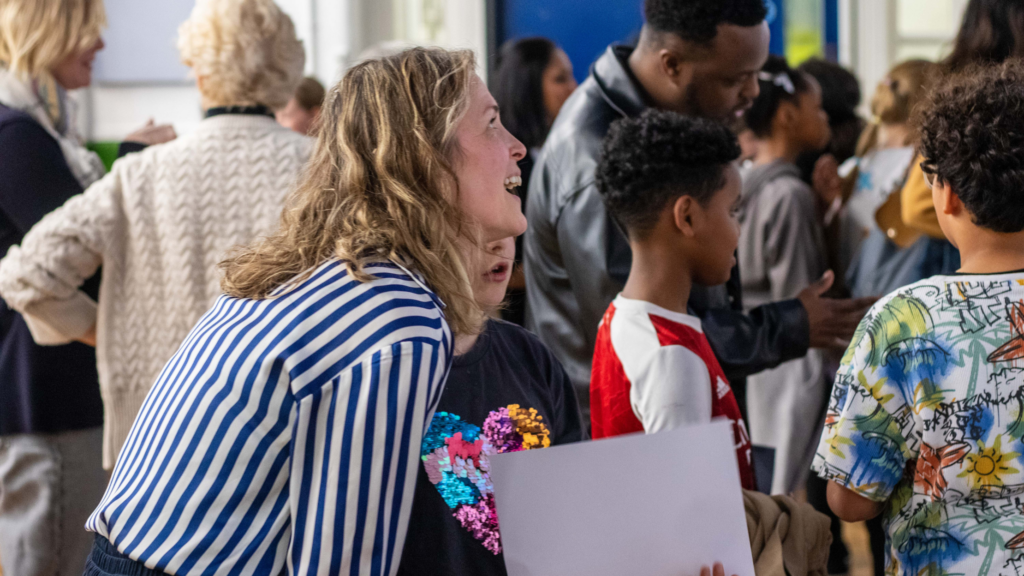
Yr 5 child explains their design concept at the Reveal display
Parents, guardians and teachers were invited to view a display of the children’s original drawings pinned up alongside the ZHA professional renders.
We are deeply grateful to ZHA for this successful collaboration with William Tyndale Primary School, and thank everyone involved for facilitating an inspiring and positive co-design experience.