Anurita Chandola FRAS Co-designs Sustainable Suits for Extreme Climates with Year 5 Pupils
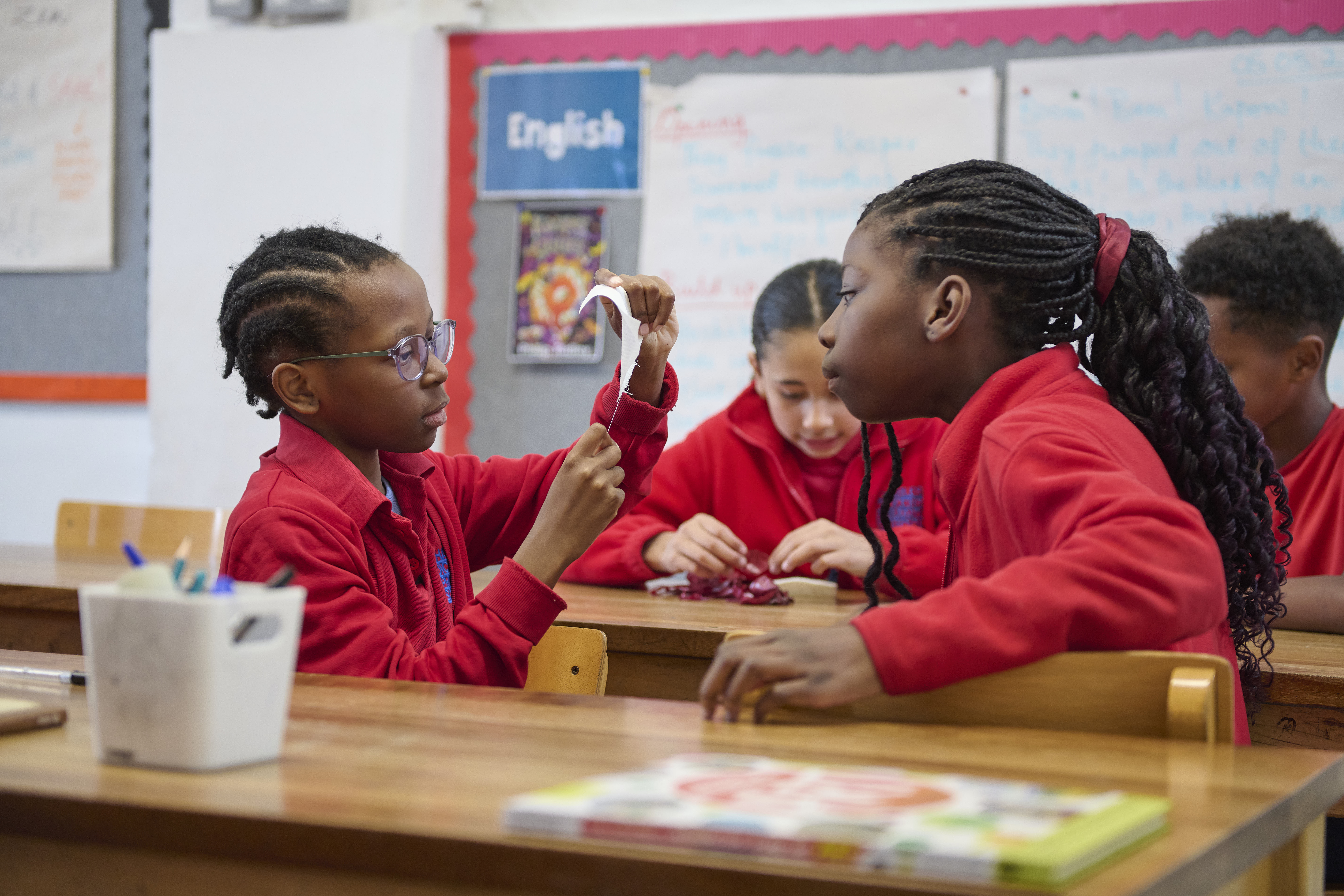
Anurita Chandola FRAS, a space-wear and textiles artist, recently completed her first co-design project with Year 5 pupils at Charles Dickens Primary School in Southwark, London. By exploring how future space travellers must live, reuse, and create sustainably, Anurita introduced the children to the critical fact that in space, resources are entirely constrained and nothing can be wasted.
To guide the students through the brief – Design a Sustainable Suit for an Extreme Climate – Anurita conducted five weekly workshops. Through storytelling about space exploration and examples of her own work designing sustainable outfits for life on Mars, Anurita taught the children about the relationship between textile production processes, their carbon footprints, and polluting waste.
Five Weeks of Workshops
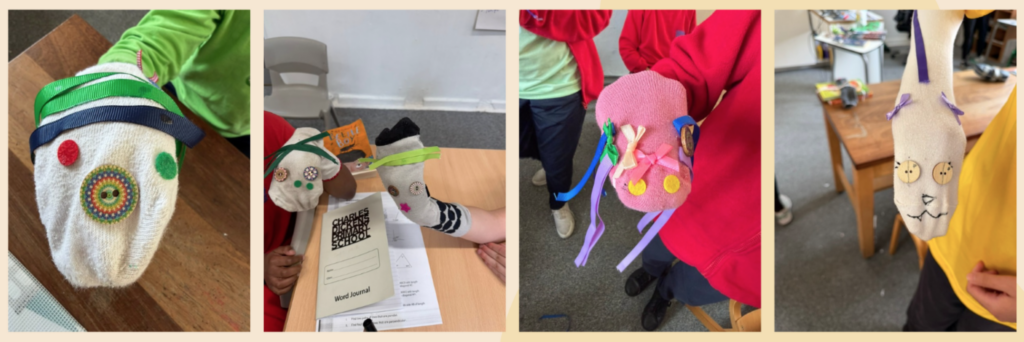
The children learnt circular fashion principles through upcycling socks to make hand puppets. (Photo Credit: Anurita Chandola)
Workshop 1: Principles of Circularity
The children were introduced to the concepts of repair, reuse, and responsible material selection. By transforming old socks into puppets, the students identified the inherent value of discarded materials and learned the basics of organic and synthetic materials’ lifecycles.
Workshop 2: Textile Construction
The pupils explored how textile construction influences breathability, cooling and insulation. By weaving recycled fabric strips and threads, they experimented with the density of a weave and how it affects airflow, which is vital for comfort and protection in hot climates or polluted environments. Learning the art of quilting they discovered how layering retains warmth.
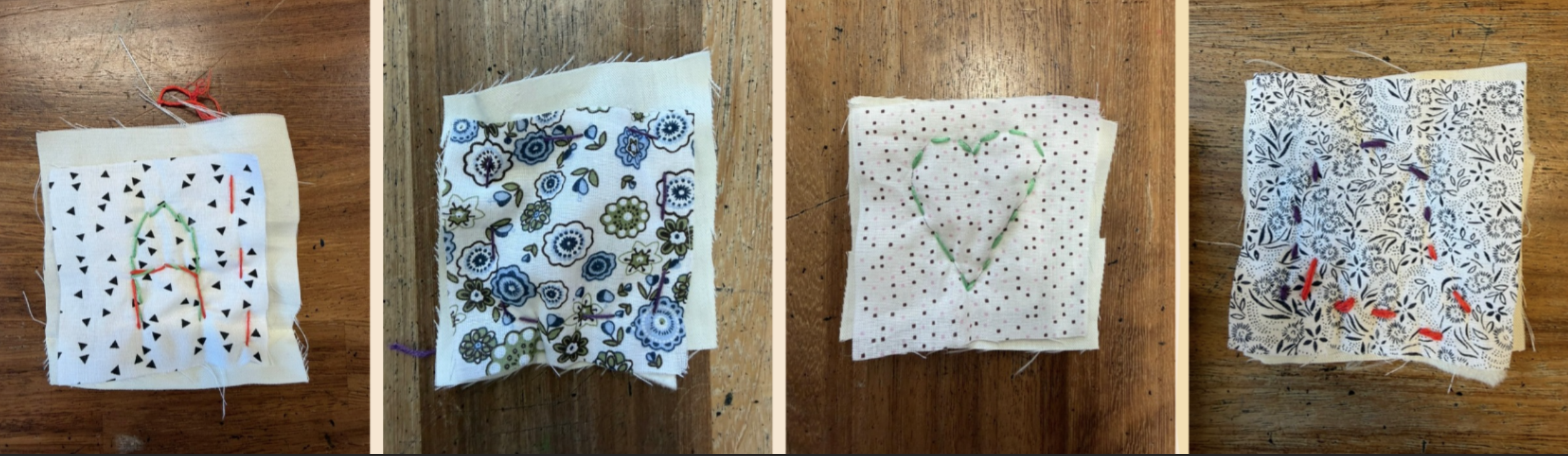
The children learned to quilt on recycled fabric scraps. (Photo Credit: Anurita Chandola)
Workshop 3: Solar Dyeing
The 9-and-10-year-olds experimented with solar dyeing, a process that uses plants, food scraps, spices, water and sunlight to colour natural fabrics of cotton, wool or linen. This provides a biodegradable alternative to industrial chemical dyes and synthetics typically used in clothing. By sealing natural materials (such as onion peels, black beans, tea, or turmeric) in jars with water and fabric, the children created naturally dyed textiles and even experimented with tie-dying.
Workshops 4 & 5: Concept Development
With a newly acquired understanding of circular design and the environmental impact of industrial production, the children worked in small teams in the final two weeks to develop their own designs for sustainable suits. They conceived specific environmental scenarios, such as extreme heat, heavy rainfall, or a polluted atmosphere to inform their choices. Together, they created sketches, mood boards, and textile prototypes based on function and sustainability.
The Children’s Presentations
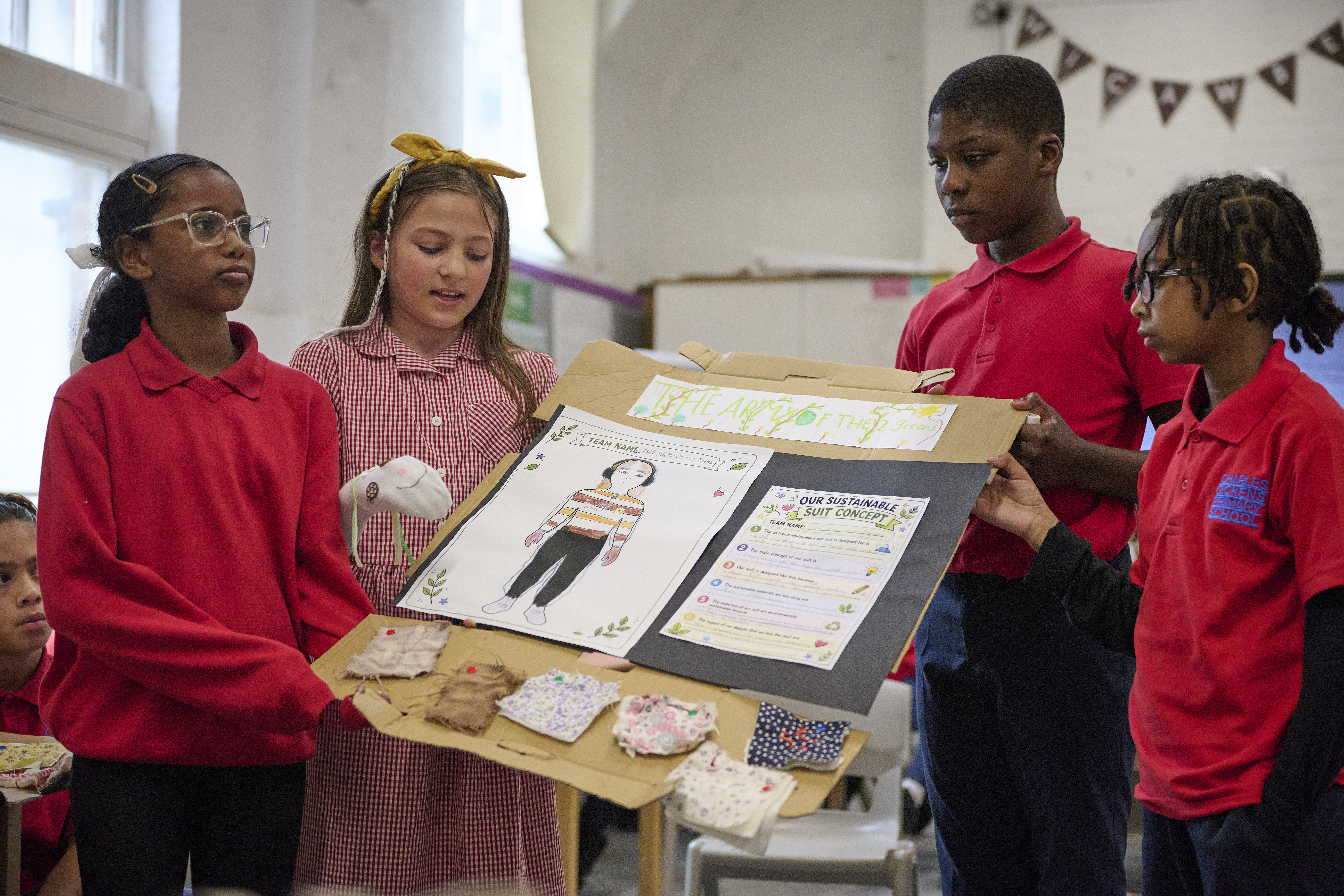
A Year 5 child-group at Charles Dickens Primary School presenting their designs to a panel of experts. (Photo Credit: Guy Lockwood)
In week six of the co-design project each child-team presented to an expert panel their design proposal for a Sustainable Suit for an Extreme Climate. Annotated drawings and detailed display panels were scrutinised as the pupils explained their concepts and climate scenarios. They were questioned on the appropriateness of textile composition, colour choices, and why biodegradable materials are planet friendly.
The children demonstrated a clear grasp of design thinking, illustrating how material scarcity can stimulate creative problem-solving. They readily linked design solutions to climatic issues. By the end of the five-week programme, they had successfully applied core principles of research, experimentation, prototyping, and presentation to transform discarded materials into imaginative, meaningful apparel.
The Reveal
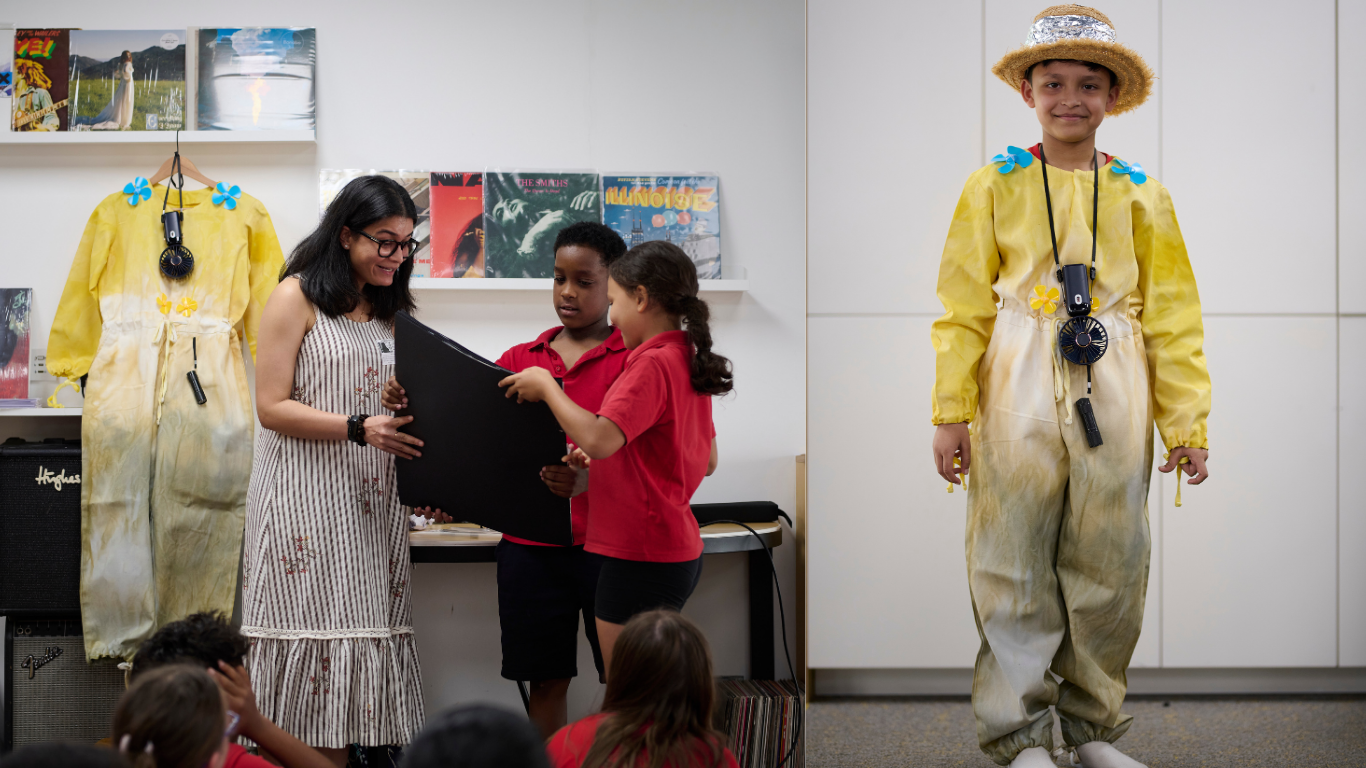
Anurita received a giant thank-you card (left) from Yr5 after revealing the suit she made that combines many of the children’s ideas for a Sustainable Suit for Extreme Climates (right) (Photo Credit: Guy Lockwood)
The project culminated in a much-anticipated Designer’s Reveal for the Year 5 children and their teachers as Anurita unveiled her professional interpretation of their design concepts. After presenting achievement awards to every child, Anurita described the inspiration she had taken from each child-group’s designs when creating an organically dyed prototype suit in Indian Khadi cotton. The final garment incorporated clever features like adjustable drawstrings for temperature regulation and breathability, shoulder and neck cooling fans powered by a solar panel hat, and an integrated mini torch. By sharing her professional design process with the children, Anurita provided a deeper understanding of how their imaginative ideas were transformed into reality, leaving the children thrilled to try on the finished costume and celebrate the success of the project.
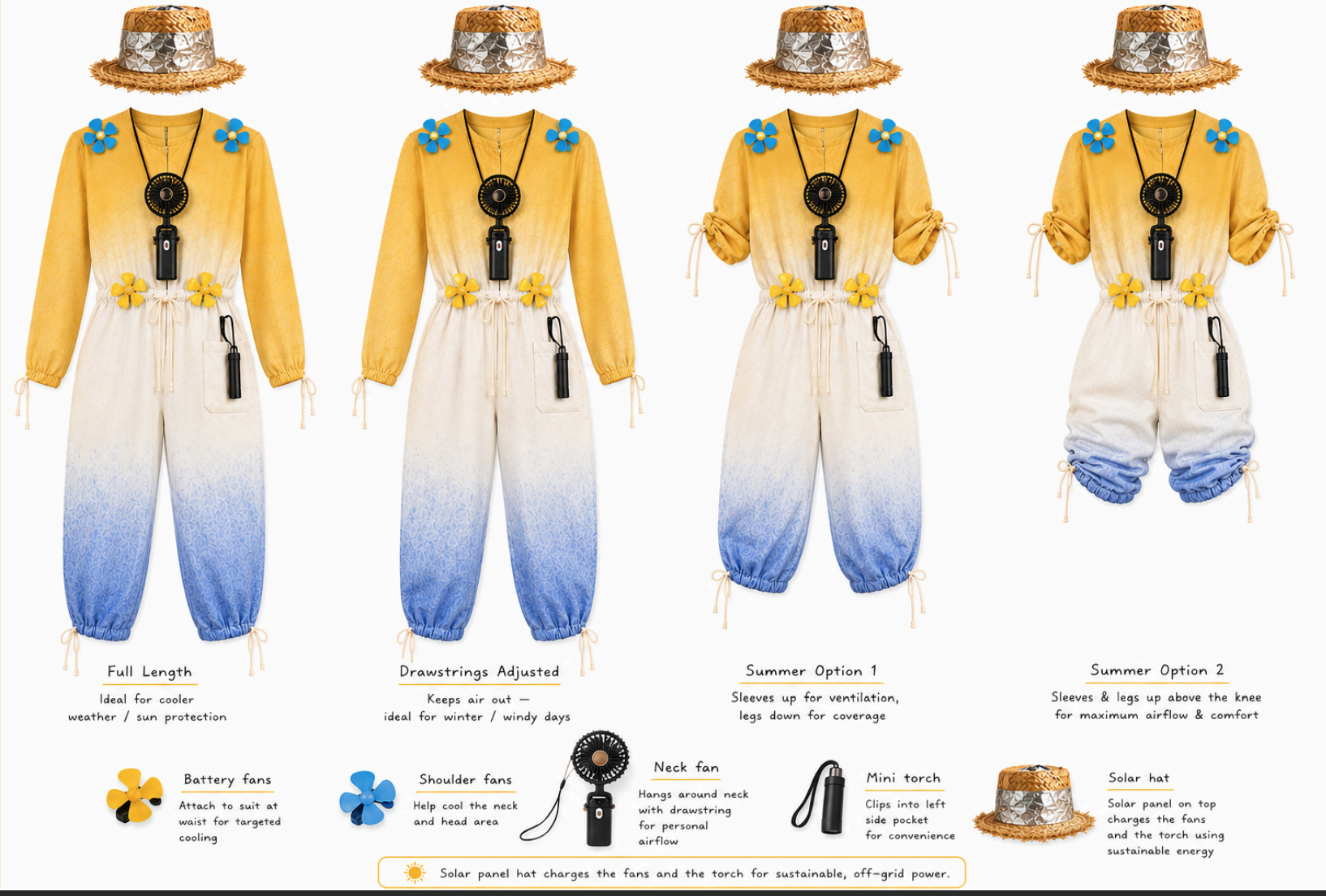
Anurita’s final mock up of the suit before which was presented at the reveal (Photo Credit: Anurita Chandola)
This inspiring co-design successfully bridged the worlds of futuristic and biodegradable clothing with primary education, proving that young minds are well-equipped to tackle complex environmental challenges. By reimagining waste as a valuable resource, the Year 5 pupils at Charles Dickens Primary School transformed abstract concepts of sustainability into tangible, innovative solutions. We are hugely grateful to Anurita Chandola for sharing her pioneering expertise, vision, and passion with the children, as well as to the class teachers, whose support made this co-design possible.