Arup and Stride Treglown Designers Team up with Headley Park Year 5s to Retrofit the School’s Clubhouse

PC: Guy Traynor
The penultimate co-design of the 2025/26 academic year took place in Bristol at Headley Park Primary School, where 9-and-10-year-olds teamed up with engineers and architects from Arup and Stride Treglown to Redesign the School Clubhouse for 2050. The collaborative team featured Aisha Gimba (architect) and Maddie Haworth (Landscape Architect) from Stride Treglown, and Ana Monteiro (Structural Engineer) and Charlotte Anderson (Public Health Engineer) from Arup.
The brief challenged the pupils to retrofit the existing clubhouse in the school grounds to make it resilient for a changing climate. To explore seasonal extremes, half of the class designed for intense summer heatwaves and drought, while the other half tackled winter conditions of strong winds and weeks of non-stop rain which would flood nearby River Avon.
As the project focused on a retrofit, assessing the existing building firsthand was vital. The children explored the site to sketch the structure, evaluate what to keep, change, or add, and identify materials that could be reused. Aisha noted the unique value of this approach: “I found it particularly helpful that the site or the context that we chose was in the school. I think that sort of proximity helped the kids to understand and engage more with the concept.”
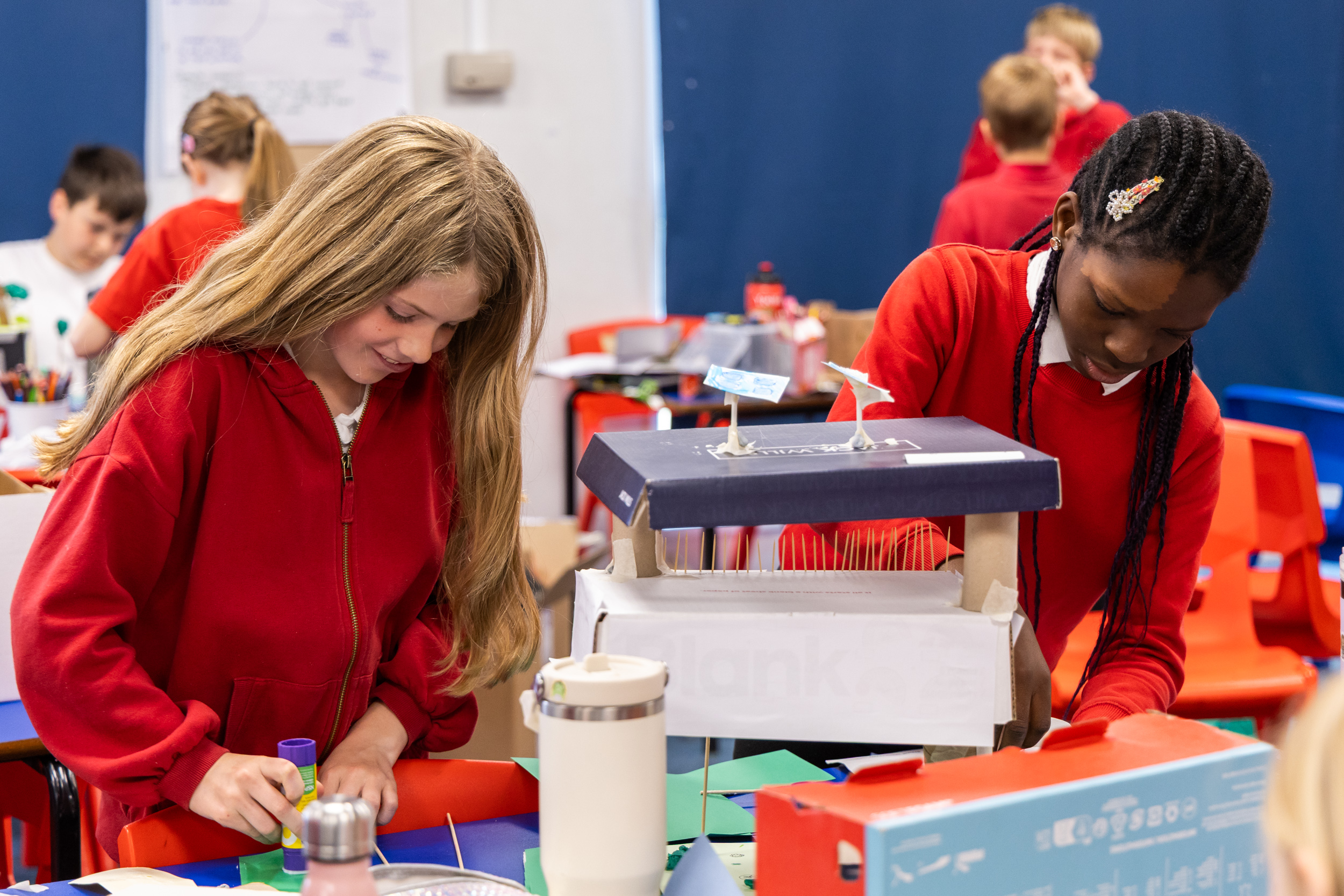
(Year 5 child-group create their model in a workshop led by Charlotte, Aisha, Anna, and Maddie) Photo Credit: Guy Traynor
To ensure the designs also championed biodiversity and ecological harmony, the designers guided the children to carefully consider water management and the surrounding landscape. Working in small groups, the pupils eagerly exchanged ideas before translating their visions into sketches and constructing models from cardboard, string, and other household materials.
Once confident in their designs, the children prepared to pitch their concepts. Their mentors encouraged them to explain how their structures tackled climate challenges, where their energy would come from, and the reasoning behind their architectural shapes. Standing before a panel of experts, the groups presented their ideas with remarkable confidence and problem-solving flair – impressing adults and peers alike, especially since many were speaking in public to strangers for the first time.
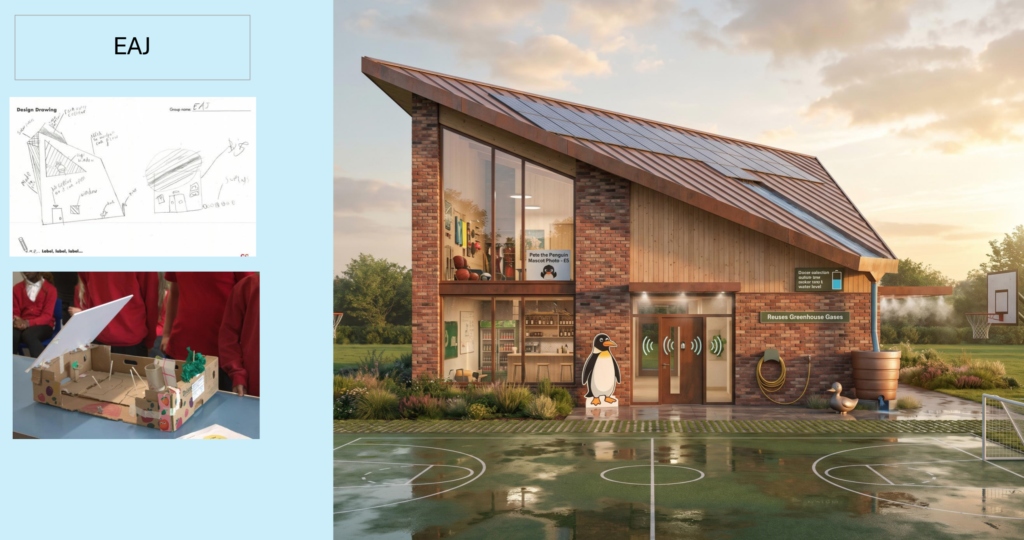
A child-group’s (EAJ) drawing and model next to the designer’s digital interpretation. (Credit ARUP & Stride Treglown)
Reflecting on the students’ upbeat attitudes, Maddie observed: “In the standard curriculum lessons of Science and Geography, some children have found climate change really daunting. But it felt as if everyone in our class just seemed excited to find solutions and they didn’t seem disheartened by it.”
The children’s inventive proposals incorporated features such as solar panels, natural ponds, tilted roofs designed to shed rainwater efficiently, water collection pods, seasonal food gardens, and vibrant sports and activity hubs. Bringing these visions to full professional life, the design team transformed all 16 child-groups’ concepts into AI-digitised renders. These were unveiled to the excited pupils and their proud parents. The Reveal event turned into a fun and well-deserved celebration of the project.

At the Reveal event, Year 5s look at the professional renders of their groups’ design concepts on the reverse of their certificates. Photo Credit: Marta Brown
A short film by Stride Treglown documenting the collaboration captured the deep impact of the experience. Highlighting the broader mission, Aisha said: “It’s really important to bring awareness about the built environment and climate change to the younger generation so that together we can find brilliant solutions for the future.”
Echoing this sentiment, Maddie added: “I think it’s important for this generation to feel empowered to tackle climate change. It gives them an alternative to the doom and gloom narrative that we usually get. I find it really rewarding to work with kids because it is so fun and creative, and you don’t know what they are going to come up with next!”
Class teacher Sebastian Craig noted the lasting transformation in the classroom: “The kids have got a tremendous amount out of the project. It has brought them together through an exciting project, and they’ve worked with designers who have modelled it very well. The number of children in my class who did not know much about architecture and structural engineers, but now want to be one, has just gone through the roof. I’ve been really impressed.”
CCAC is deeply grateful to Bristol’s designers, teachers and children for making this co-design such a resounding success.
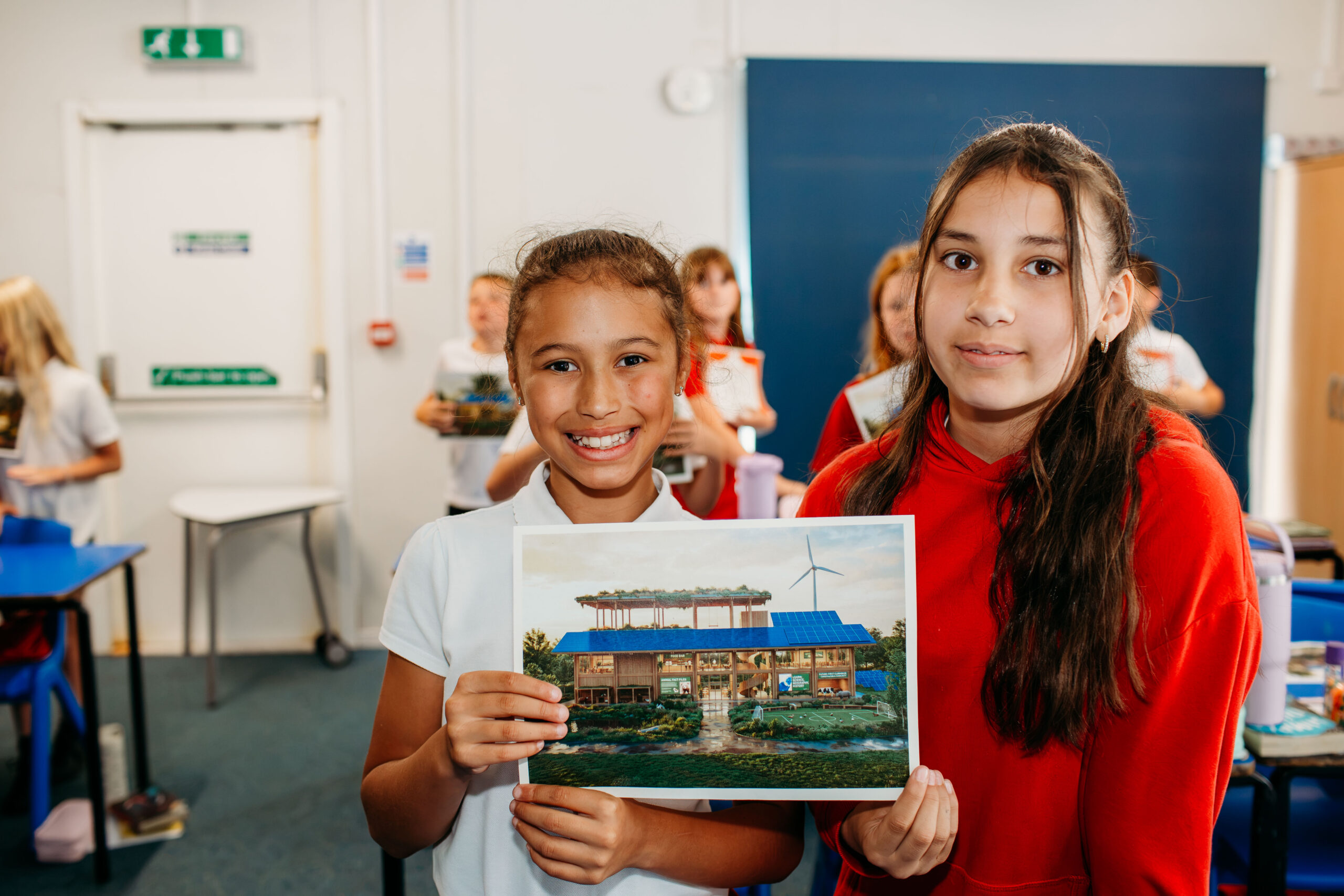
Year 5 children proudly show their design as interpreted by Arup and Stride Treglown at the reveal event Photo Credit: Marta Brown