ZHA return to Thornhill Primary School for “Tomorrow Makers”
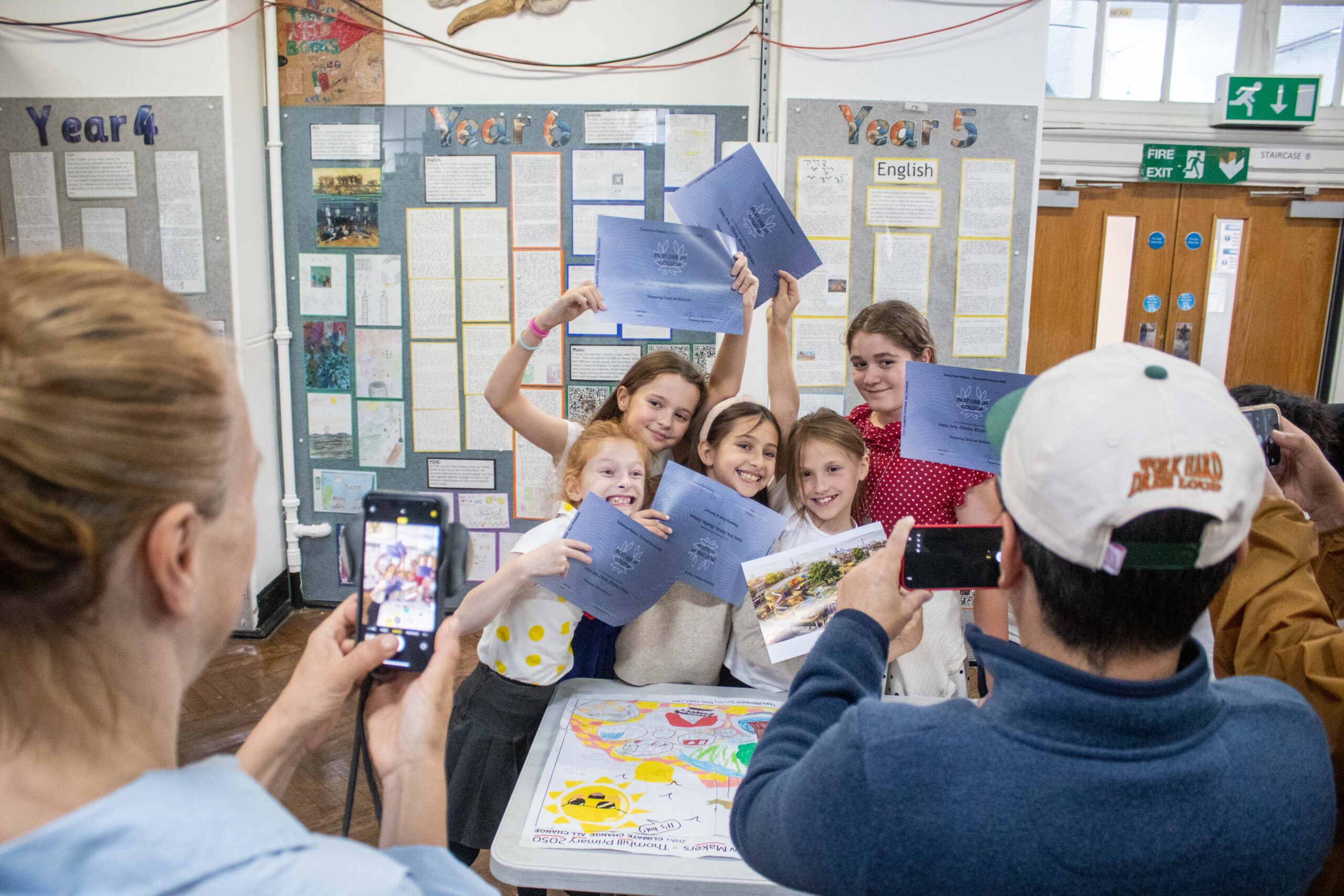
Architects from ZHA returned for their third consecutive year to Thornhill Primary School to lead a co-design project titled “Tomorrow Makers”, which challenged Year 5 pupils to imagine their school in the year 2050 and to design a climate-resilient learning environment for the future. This year, architects Nurul Ahmad Fauzi and Jing Xu led the project.
Over a series of five weekly workshops, the children explored the realities of climate change and the future of Thornhill, learning about sources of renewable energy, and how sustainable building materials perform. By focusing on a familiar site, the pupils were able to grasp the scale of their desired buildings and their spatial interstices.
The workshops introduced core principles of environmental design, teaching the children how buildings must respond to weather and climate to mitigate extreme events like floods and droughts. Key considerations included building orientation, sunlight and shade, insulation and thermal mass, natural ventilation, and the strategic positioning of windows, alongside natural cooling methods such as shade from trees.
To deepen their understanding, ZHA shared computer-generated wind flow simulations that demonstrated how specific design choices can achieve a cooler classroom climate in summer and better insulation in winter. Building on this foundation, the children explored renewable energy sources and sustainable integration methods, such as smart daylight sensors, green roofs, green playgrounds, and solar panels.
With their climate knowledge established, the Year 5s took an exciting trip to visit the ZHA offices. Immersed in a working architectural studio, they experienced the professional environment first-hand and explored the high-tech applications used by the firm.
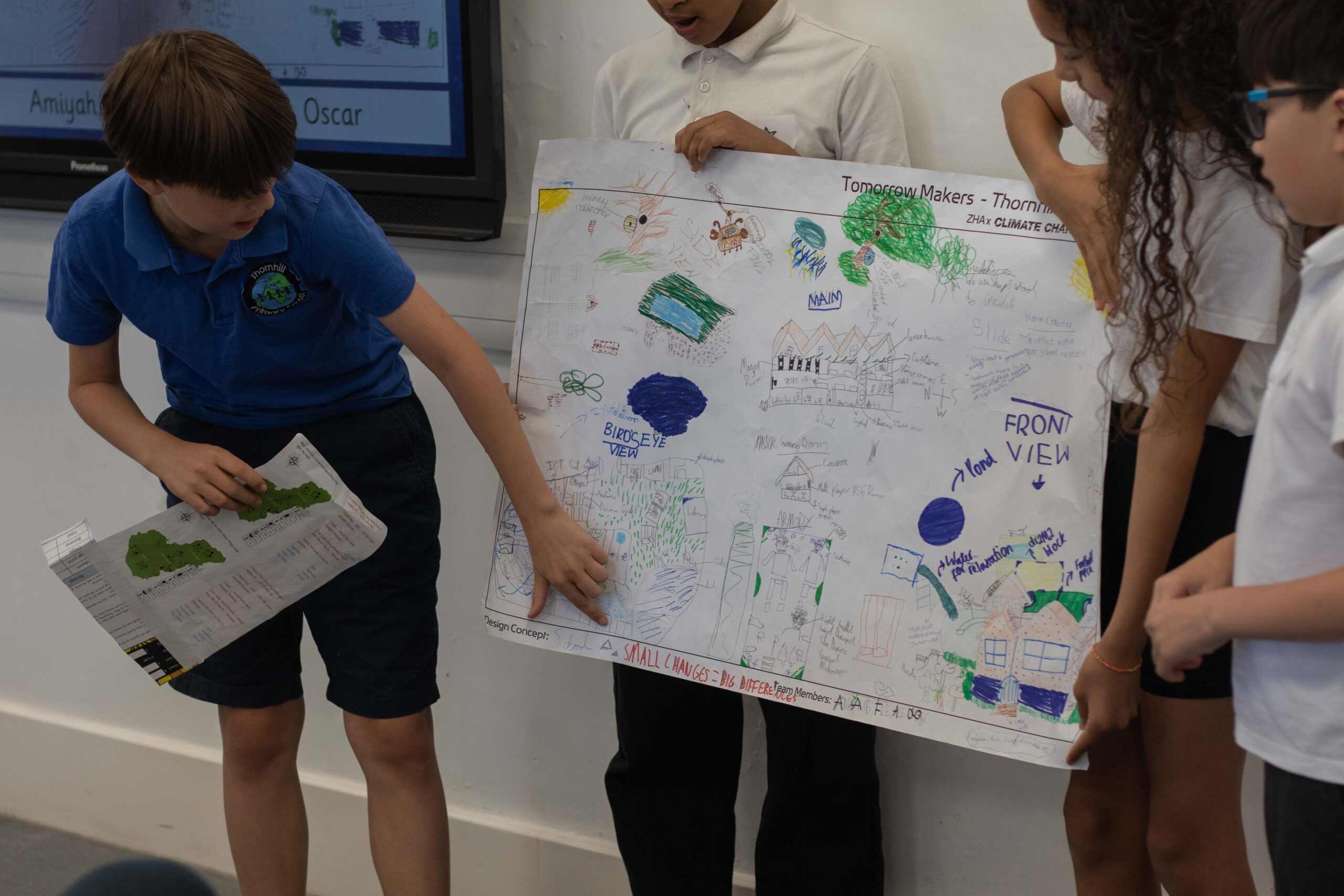
A child-group present their ideas to a panel of experts
The children were introduced to essential architectural techniques for ideas generation, learning how to produce 2D sketches, floorplans, sections, and axonometric drawings – a 3D view of a building without perspective, distinct from standard real-life perspective views. They also learned the fundamentals of model-making, discovering how a physical 3D model transforms an architect’s drawing into something tangible that people can see and understand.
Working in small teams, the pupils applied these skills to their group designs. Their designs featured shading trees, bamboo construction materials, nearby wind turbines, rooftop solar panels, vegetable patch roof gardens, and treehouse classrooms, alongside buildings raised on stilts to mitigate flood risks.
The project culminated with the children presenting their work in teams before a panel of experts, including senior representatives from ZHA, Thornhill Primary School, and CCAC. The pupils spoke confidently about their concepts and fielded questions regarding their environmental design choices.
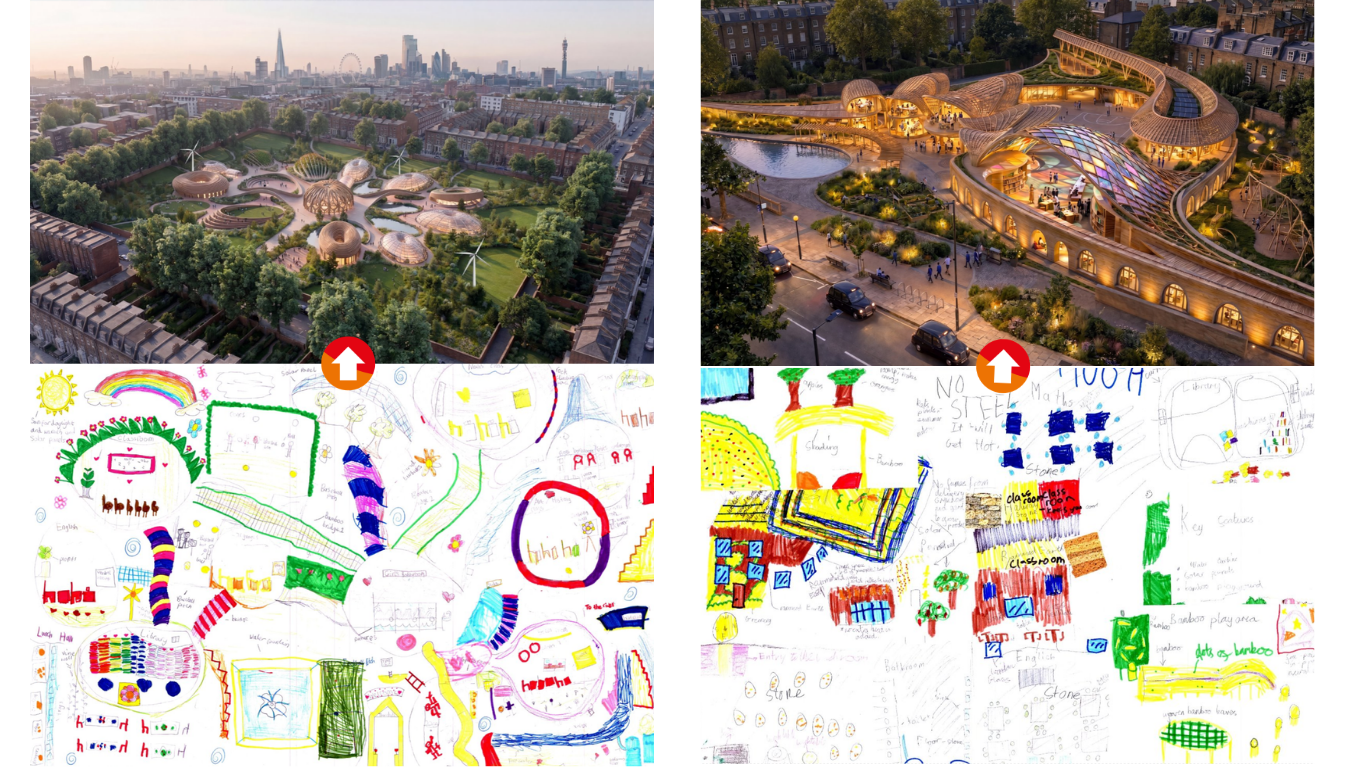
ZHAs professional interpretations of the two winning teams’ designs
To thank ZHA and CCAC, Thornhill Primary School produced a video featuring this heartfelt reflection from a parent:
“As a parent, the Climate Change All Change and Zaha Hadid collaboration was such a positive experience because it did that thing that we’re always trying to do of talking to our kids about climate change in a way that doesn’t invoke fear or paralysis. It channelled their energy into doing something creative and practical about it. And we were just incredibly grateful and happy to see that. And, for my child, who was on the winning team [of his class], was able to go to Zaha Hadid’s office and talk about his experience. I honestly think that was a completely formative experience for him and one that he will never forget. It did wonders for his confidence and for his aspirations. And so, we are grateful to all the partners involved, Climate Change All Change, Zaha Hadid Architects and the school for prioritising this when they could just focus on what’s in the curriculum. But taking kids outside and doing something special and different like this is just the most brilliant experience and the more kids who can benefit from the programme, the better.”
CCAC is deeply grateful to ZHA and Thornhill Primary School for their continued support and celebrate this milestone of three successful years of co-design projects.