Clara Chu x Derwentwater Primary School: Survival Backpacks for 2050
(Photo Credit: Yilin Wong)
London-based fashion accessories designer Clara Chu has returned to CCAC for another impactful co-design project, teaming up with Year 5 pupils at Derwentwater Primary School in Acton. Renowned for creating vibrant, playful accessories from discarded everyday items, such as mops, toasters, and toothbrushes, Clara champions circular fashion principles through upcycling, reuse, and repairable design.
Her project brief, Survival Backpacks for 2050, challenged the children to imagine a future where fashion items must extend beyond aesthetics to meet basic survival needs during climate extremes. Set against global statistics, where fashion accounts for up to 8 per cent of global carbon emissions, consumes vast amounts of water, and produces the equivalent of a rubbish truck-full of clothes burned or sent to landfill every second, the co-design brought a vital sense of real-world urgency into the classroom, in a joyful and creative way.
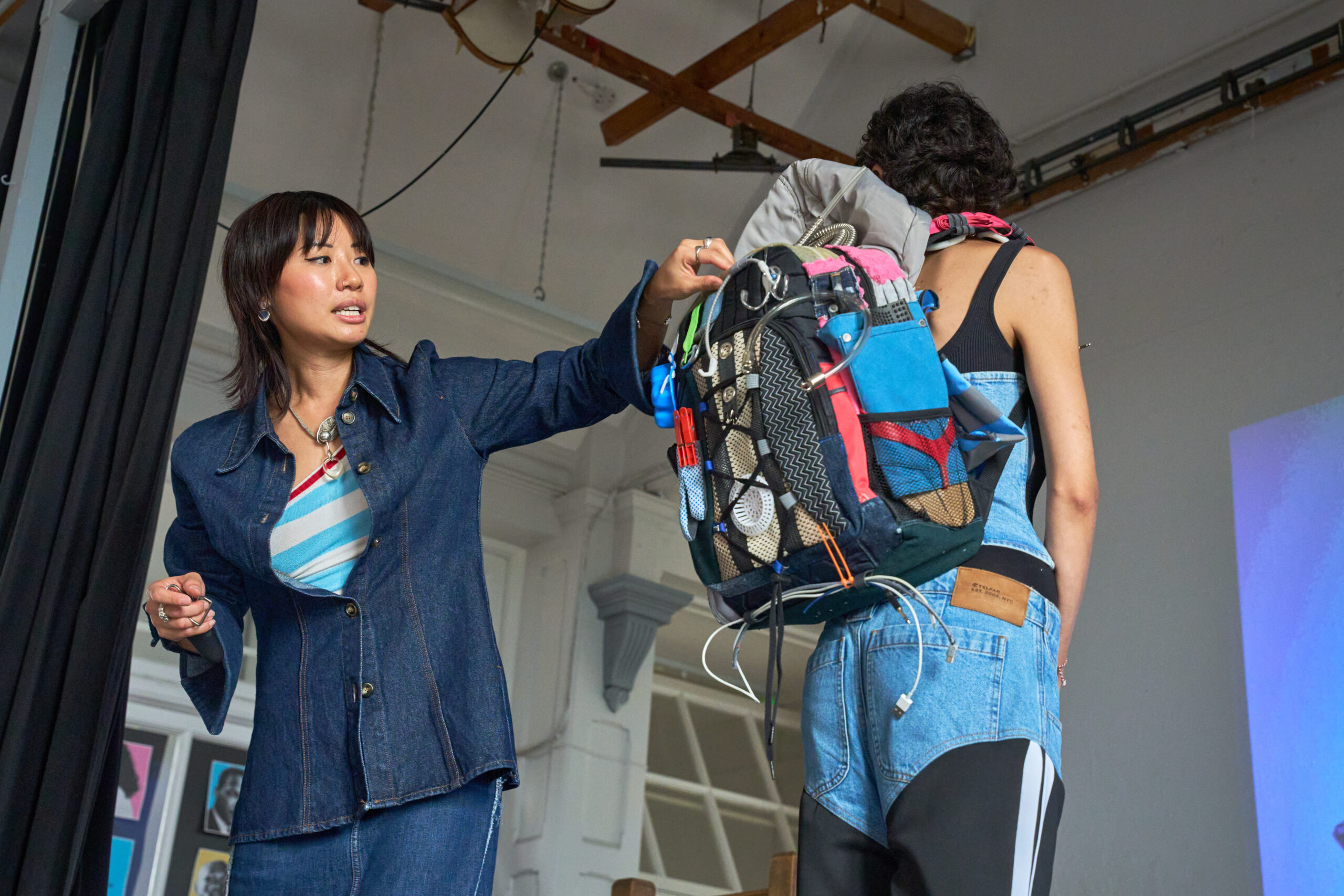
Clara demonstrating fashion techniques with repurposed materials (Photo Credit: Yilin Wong)
To ground their designs in environmental science, Clara introduced the Year 5s to Lifecycle Analysis (LCA), a method used to evaluate a product’s environmental footprint from raw material extraction to final disposal. The children explored how harvesting raw materials and manufacturing clothing requires significant machine electricity, thermal heat, and transport fuel. By exploring the lifecycle of everyday garments, the students learned how consumer habits and fast fashion contribute directly to atmospheric carbon dioxide. They examined waste timelines, discovering how different materials decompose and why plastics persist in landfills for thousands of years. Crucially, Clara highlighted the distinction between reusing and recycling, encouraging the students to think like designers who minimise environmental impact by repurposing existing materials rather than producing new ones.
Child-group present their ideas to a panel of experts (Photo Credit: Yilin Wong)
Equipped with this theoretical foundation, the children progressed through a series of hands-on, interactive workshops:
Week 1: Each group was handed three everyday household objects and given ten minutes to brainstorm and assemble a quick prototype. The teams presented their initial concepts to the class.
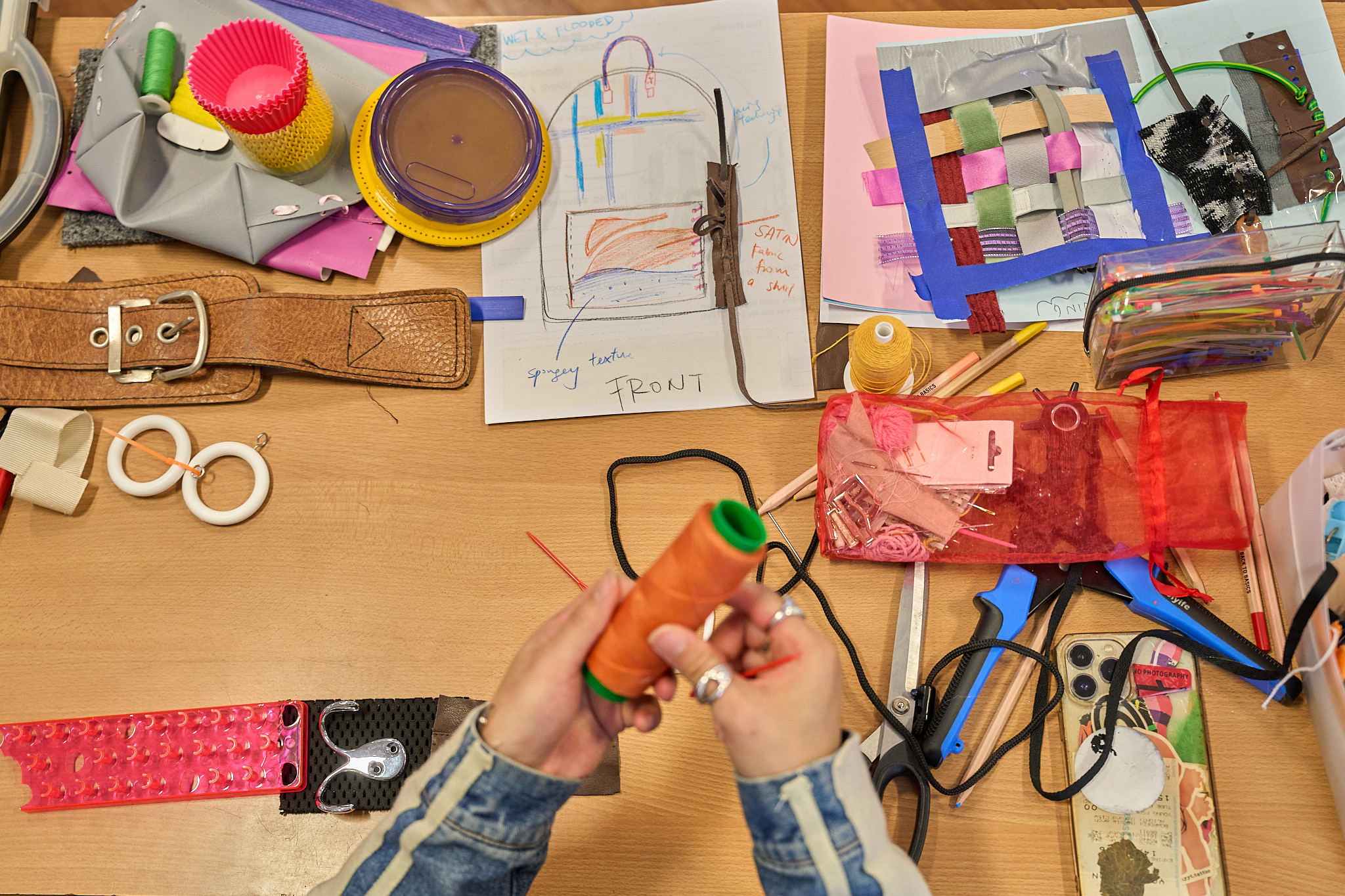
Week 2 & 3: Students investigated the composition of everyday items, from socks to mobile phones, to evaluate how material selection impacts the planet long after a product’s life ends. Through hands-on experimentation with binding and combining contrasting textures, each group produced a detailed materials board to outline their preferred construction techniques. Clara shared inspiration from her own work, demonstrating how potato mashers can form bag handles, shower mats with suction cups can create interactive flaps, and shower hoses can serve as durable straps.
Weeks 4 & 5: Working in small groups, the children developed comprehensive presentation boards incorporating 2D sketches and 3D tactile elements. They specified how each chosen material supported their design narrative, ensuring every survival backpack incorporated at least five upcycled everyday objects.
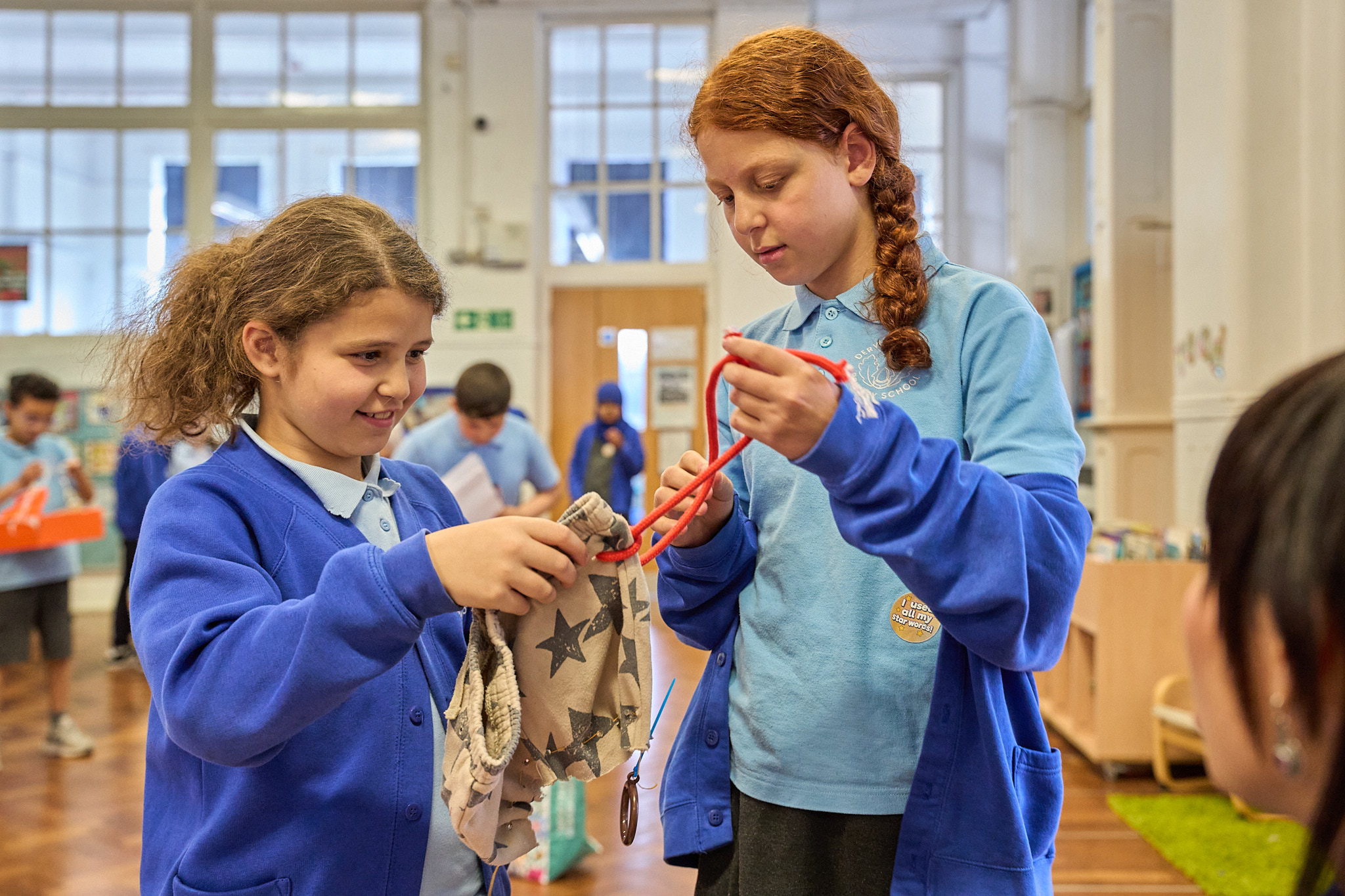
Year 5s team-up to reuse materials for their survival backpack for 2050 design (Photo Credit: Yilin Wong)
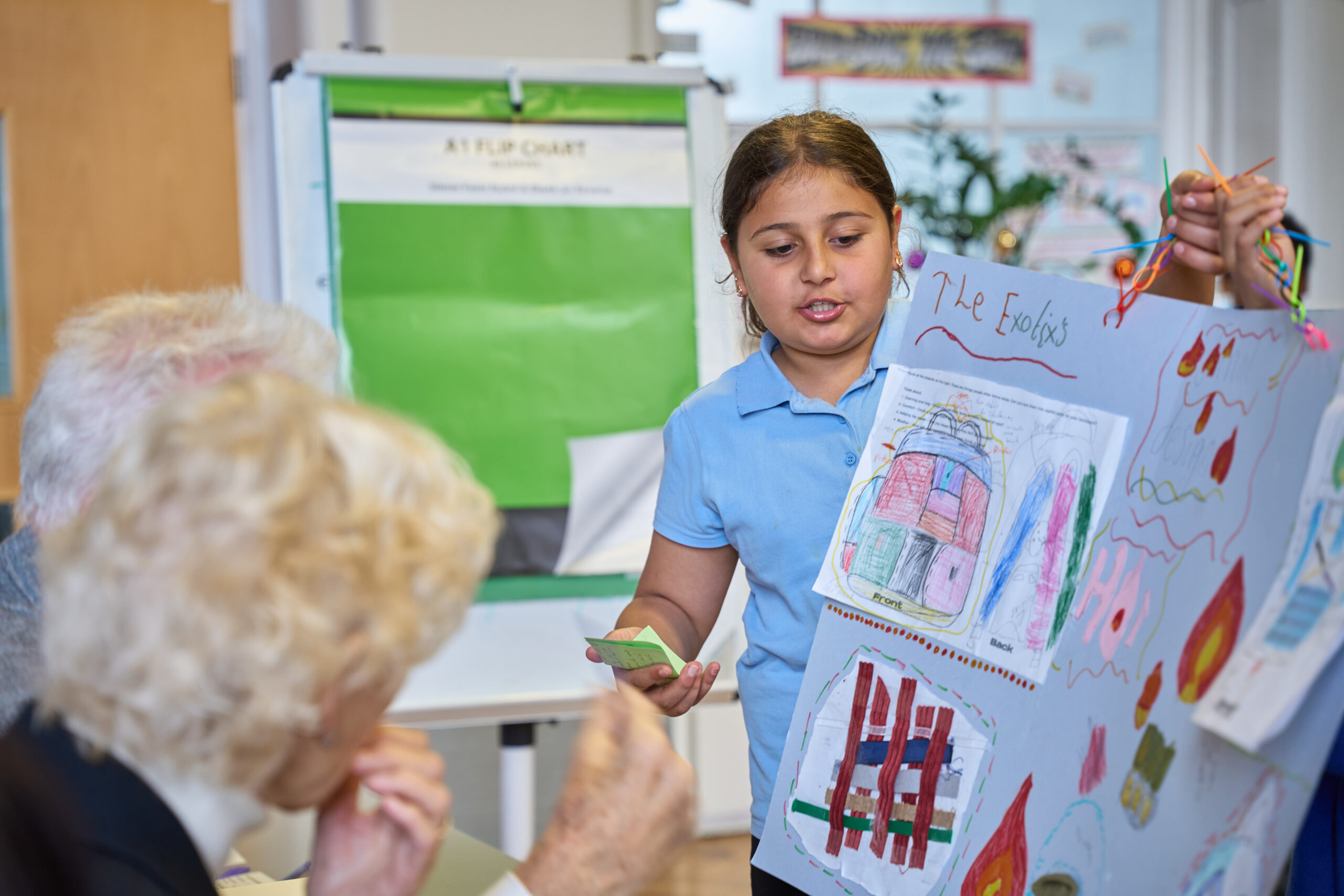
The project progressed to group presentations where the pupils pitched their concepts to a panel of experts. The children demonstrated a clear grasp of climate adaptation, speaking confidently about their material choices and answering technical questions regarding environmental resilience.
Following the presentations, Clara synthesised key design features from the student proposals across three distinct climate scenarios (extreme heat, severe flooding, and freezing conditions) to craft three professional prototypes:
Extreme Heat and Drought Prototype: Features a solar-powered cooling fan, a squeeze-air system and a dedicated water storage compartment with an additional water-carrying attachment. Fastenings were created using electrical cables, shoelaces, and elastic bands.
Wet and Flood Prototype: Incorporates a waterproof outer shell with sealed compartments and a protective rain cover. Buoyancy features include swim floats and inflatable washing-up gloves, complemented by a modular clip construction, lightweight plastic components, an emergency wetsuit layer, and flip-flop paddles.
Cold and Snow Prototype: Designed with wheels for transport across snow, dark-coloured heat-absorbing fabrics, an integrated glove compartment, a fold-out protective jacket layer, and adjustable sock straps with a shoelace lacing system for an adaptable fit.
The project concluded with Clara leading a reveal event, presenting her digital professional mock ups, and one physical interpretation back to the students.
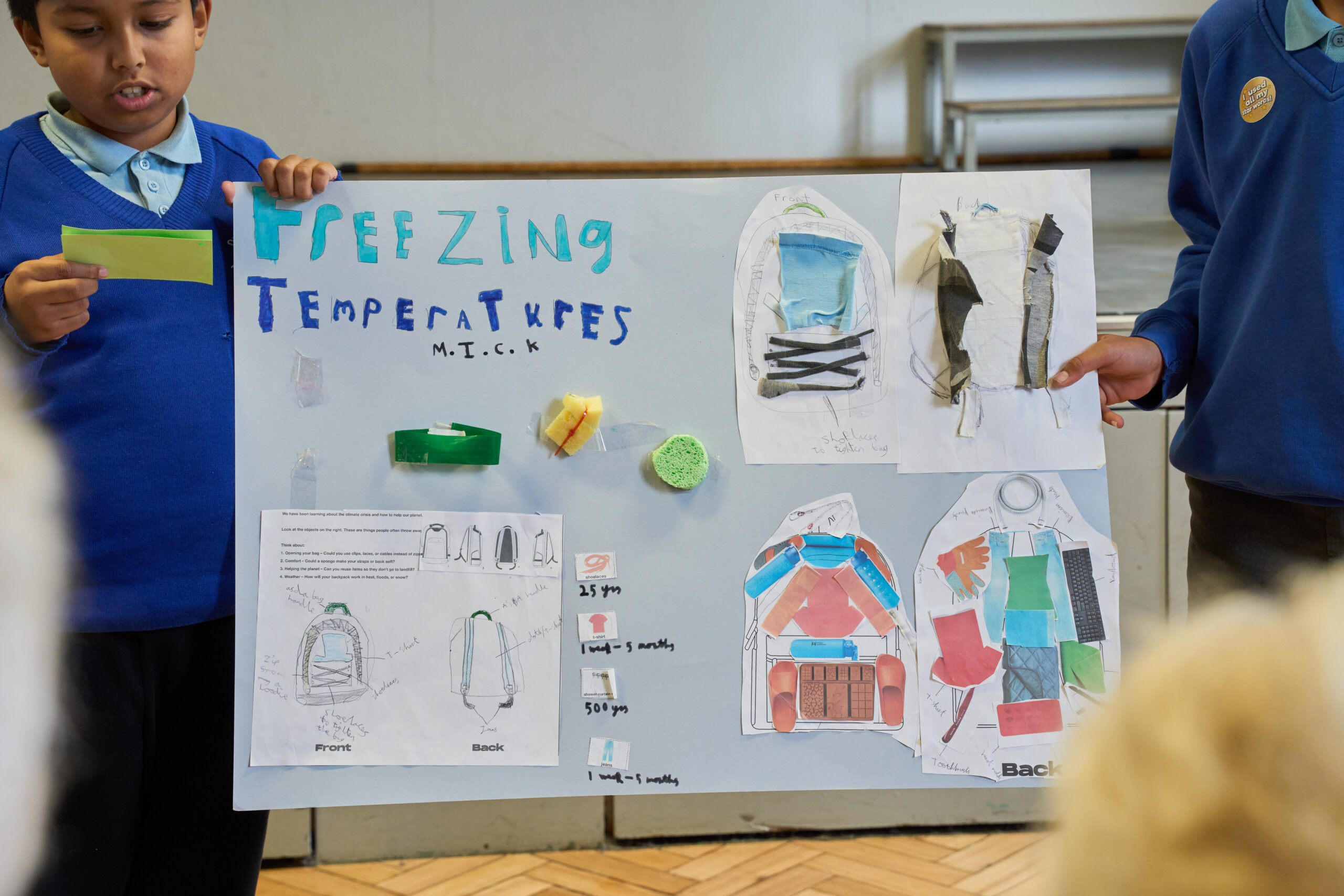
A child-group’s final mood board for their survival backpack design (Photo Credit: Yilin Wong)
We extend our sincere thanks to Clara Chu for delivering another exceptional co-design project, equipping the pupils at Derwentwater Primary School with vital circular design literacy and demonstrating how creative repurposing can help address complex environmental challenges.
Clara Chu is the recipient of CCAC’s Young Designer’s Award, generously sponsored by The Linbury Trust.