From Low-Tech to High-Tech: CCAC’s Leading Co-designs for the New School Year
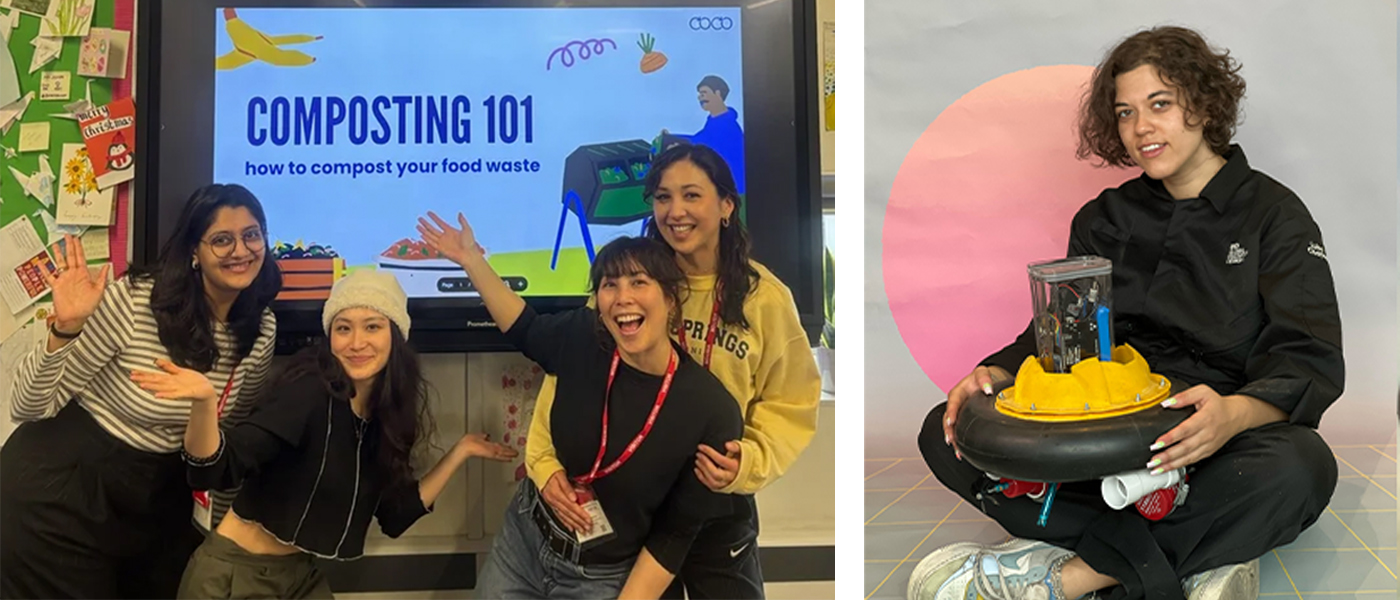
Both Compost Collective and Luisa Charles are successful applicants for the 2025 CCAC Young Designer’s Award. The four scientist/designer members of the Collective are promoting greater awareness of waste deployment, organic regeneration, and food production. They will be envisioning Lyndhurst Primary School Southwark as a biodiversity hub for the surrounding community. Luisa, a design engineer and interaction designer, works across a wide variety of media using creative problem-solving to communicate complex ideas and find unconventional solutions to abstract problems. She is introducing companion robots to the children of Laycock Primary School Islington.
Compost Collective: Cultivating Community
Comprising qualified scientists and designers Alyson Tobin, Hannah Ogahara, Ramma Pande, and Yoshimi Hata, the Compost Collective is dedicated to strengthening community bonds through local climate action. Their mission is to make composting an accessible and engaging activity that promotes environmental sustainability and wellbeing.
Their co-design collaboration begins by engaging children with the tangible realities of composting, soil health, and food waste. From this foundation, the project expands in scope, challenging the students at Lyndhurst Primary to imagine an extreme climate future where these principles of environmental regeneration and community engagement are not just ideas, but common practice, transforming their school into a central node of local biodiversity.
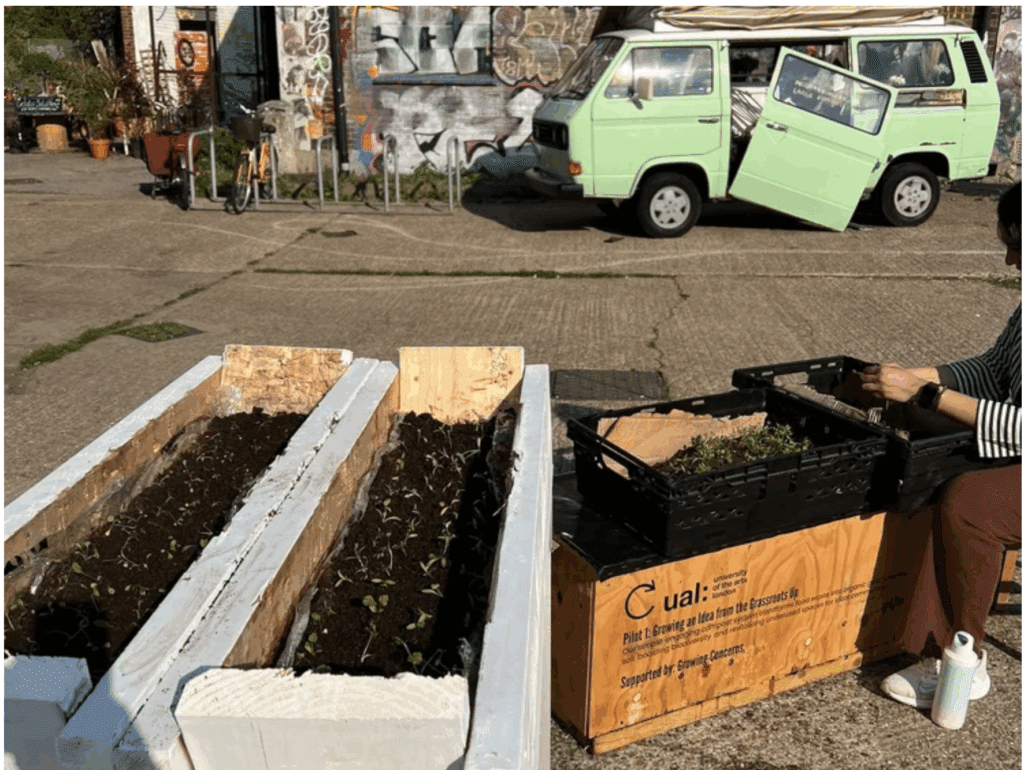
You can read more about their vision and accomplishments on their website here: Compost Collective
Luisa Charles: Prototyping Tomorrow’s Climate Companions
Multi-award-winning Design Engineer and Interaction Designer, Luisa Charles, designs for people, planet, and futures – specialising in community relationships with emerging technology. Drawing on experience of engineering special effects for feature films, building robots with indigenous communities in the Amazon rainforest, and designing systems that enable citizen scientists to monitor water quality, Luisa works across diverse media to communicate complex ideas and find unconventional solutions to abstract problems.
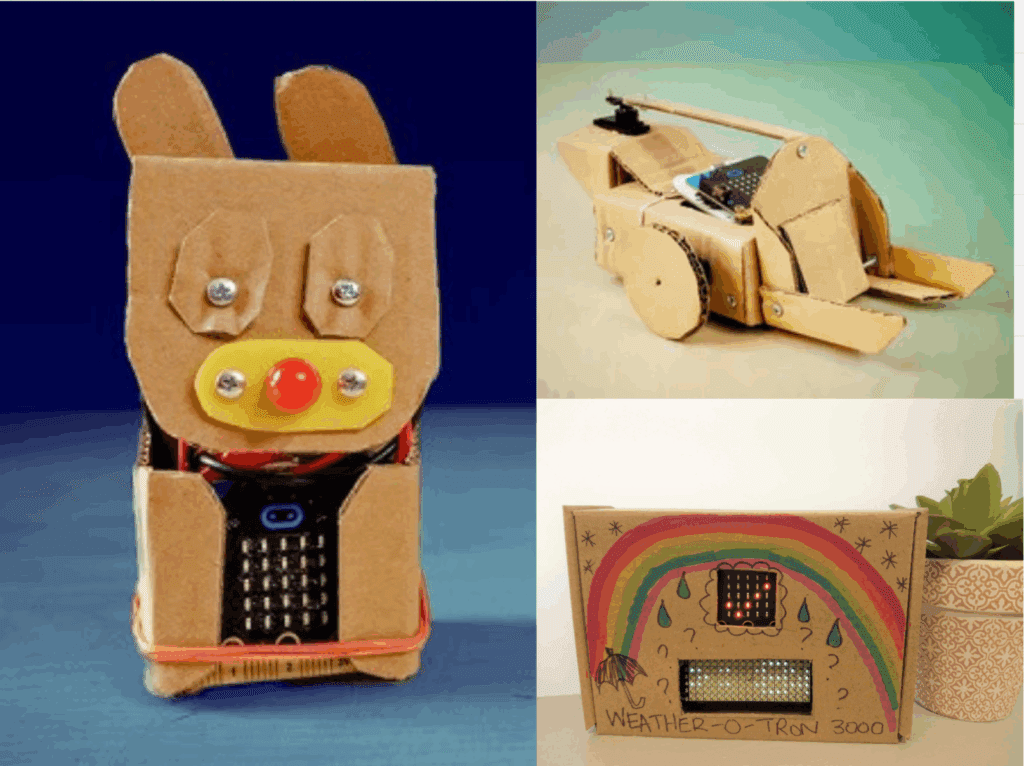
In her forthcoming project, Luisa will co-design companion robots that respond to the effects of climate change. Their functions might include anything from monitoring soil moisture and supporting plant growth, to spinning protective paddles when sensors detect incoming giant hail – the devices will be inspired by the children’s imaginations. The co-design process invites children to prototype robots from cardboard and circuitry, imagining them within future extreme-climate scenarios. Luisa will then interpret their proposals through her professional lens, translating them into high-fidelity prototypes, models, or simulations.
Discover Luisa’s extensive archive of projects on her website here: https://luisacharles.com
This programme is generously supported by the Portal Trust.