Ecobots: Young Designer Award Winner Luisa Charles Leads a Climate-Robotics Co-design at Laycock Primary School
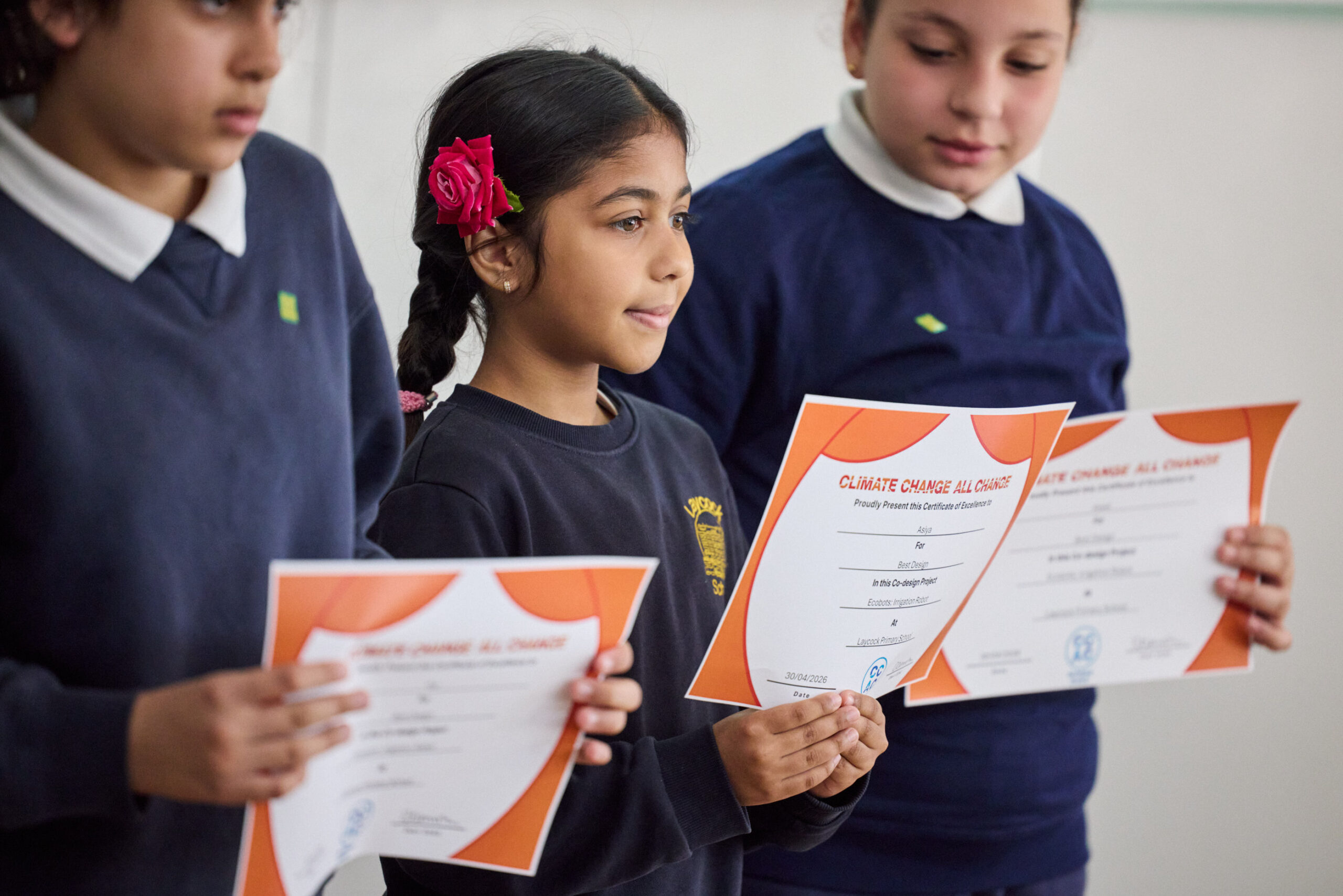
Luisa Charles, a multi-award-winning interactive design engineer and one of CCAC’s Young Designer Award winners of 2025, has successfully completed her first co-design project with the 2025/26 Year 5 cohort at Laycock Primary School, Islington.
Titled ‘Ecobots’, the ambitious five-week brief challenged the children to create simple electronic bots capable of identifying harmful impacts of climate change. Through this project, the students discovered how robotics can mitigate climate disasters – acting as remote-controlled allies that can venture into dangerous environments, collect vital data, and execute tasks unsafe for humans.
As one Year 5 student powerfully reflected on the project’s urgency:
“I knew nothing about climate change before this project. I had no idea about its impact on the earth. We don’t have another planet to go to, so we must do something about it now.”
Weeks 1 & 2: Climate Scenarios and Coding
To ground the project, Luisa introduced the children to various global arenas where robotics intersect with climate action, including transport, logistics, agriculture, and nature conservation.
The students were tasked with imagining London in 2075. They explored severe climate scenarios such as flash floods, plummeting air quality, and extreme summer heat. They examined what life would look like without technological interventions. To encourage collaboration, the classes voted on specific climate conditions to target.
To bring these robots to life, the school utilised the BBC’s “Micro:bit” scheme, an open-source hardware system designed for computer education. Luisa made the technology accessible by describing the Micro:bit as the “robot’s brain” requiring specific code to function.
Once the children programmed their sensors, they turned their classroom into a live laboratory. Acting as data annotators, the teams logged environmental variables such as temperature shifts, changing light levels, air quality, and sound, recording their findings in groups to understand how real-world sensors function in extreme conditions.
To ensure their creations could be powered sustainably, Luisa also introduced the Year 5s to renewable energy sources, including solar, wind, and hydroelectric power. The children applied this knowledge by constructing their own basic motors, gaining the foundational context needed to build clean-energy wind turbines later in the project.
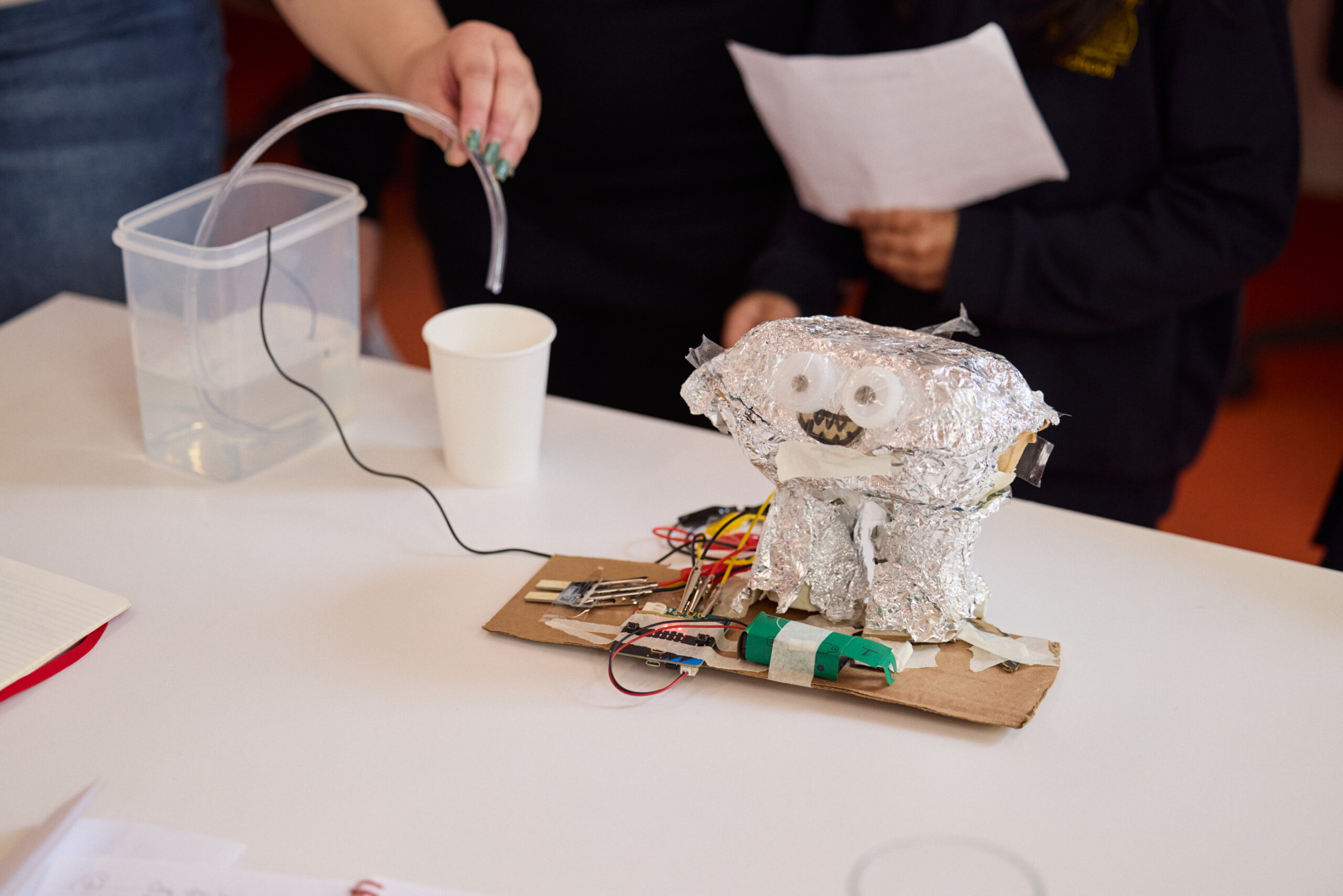
Year 5 child-group from Laycock Primary School show their design for Ecobots
Weeks 3, 4 & 5: Designing for London in 2075
With data logged and the Micro:bits programmed, the focus shifted to physical design. The children studied existing environmental robots for inspiration, including The SlothBot: a slow-moving conservation robot that monitors forest canopies and The RoboBee: designed to assist crop pollination.
The children learned the importance of drafting precise design specifications before building. They were taught about adaptive structural design – such as amphibious buildings and river defences for flood zones, natural ventilation and heat-resistant shading for droughts.
This freedom to innovate sparked immense enthusiasm in the classroom. “I loved how I was allowed to come up with different ideas of my own and to draw them,” shared one Year 5 student. “We don’t get to do this in DT lessons. No one was telling me what to think or draw.”
During Week 4, the teams wired their circuits and finalised their programming code. By Week 5, it was time to manufacture the final robots with recycled materials. Luisa shared her own previous project, “The Float Robot”, to demonstrate sustainable manufacturing, which was constructed from Tupperware boxes, bilge pumps, and tuk-tuk tyre inner tubes. The Year 5s’ version used repurposed cardboard, plastics, and aluminium foil to build their final working models.
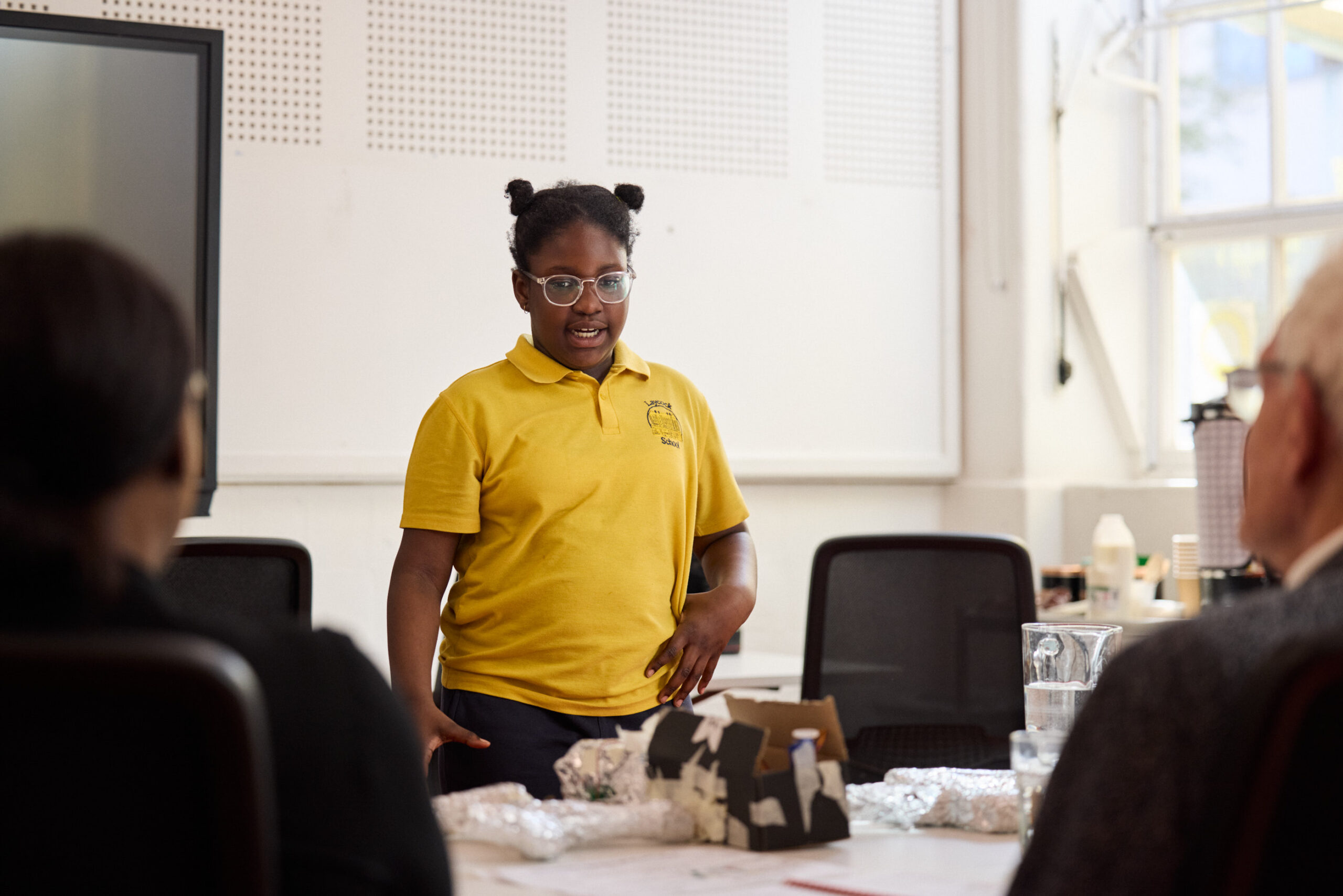
Year 5 child from Laycock Primary School presenting their robot to a panel of experts
The Professional Reveal: The C.A.N.O.P.Y Companion 5000
The next stage of the co-design was a formal presentation where the children confidently demonstrated their working models and designs to a panel of experts.
Following the presentations, Luisa took the children’s ideas back to her studio to turn them into professionally designed visualisations. The result was the C.A.N.O.P.Y. Companion 5000 (Climate Adaptation Network for Oxygen, Protection, and Yield).
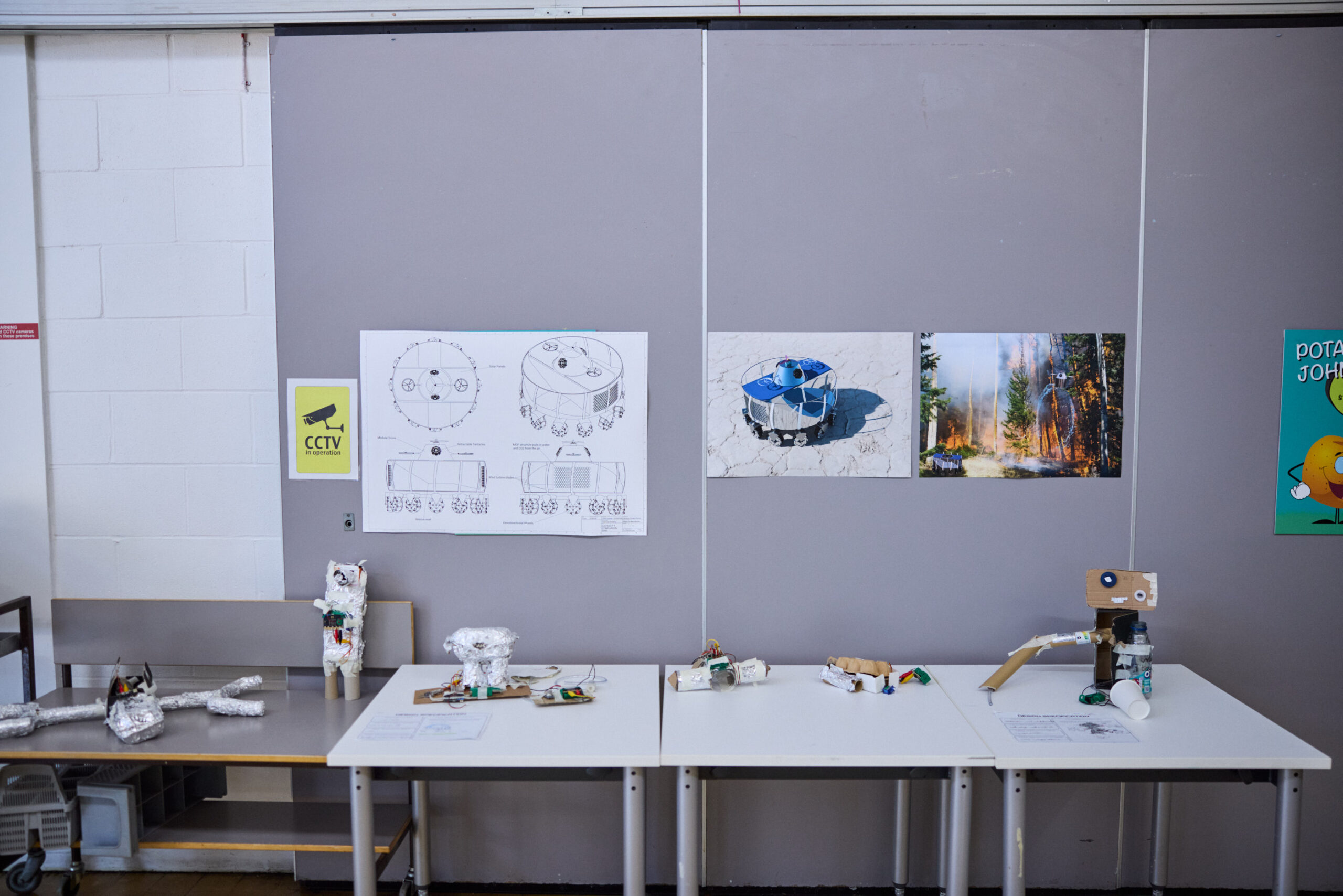
The children’s designs next to Luisa Charles’ interpretations, displayed at the reveal event
A result of this exciting co-design was the concept of a multi-functional robot, built for everyday environmental maintenance, emergency response, and habitat regeneration. Its professional features include:
- A modular drone and retractable tentacles for versatile operations
- Integrated solar panels for clean energy
- A Metal-Organic Framework (MOF) structure designed to actively harvest water and extract CO2 from the atmosphere
- Omnidirectional wheels and an integrated rescue seat for emergency transport
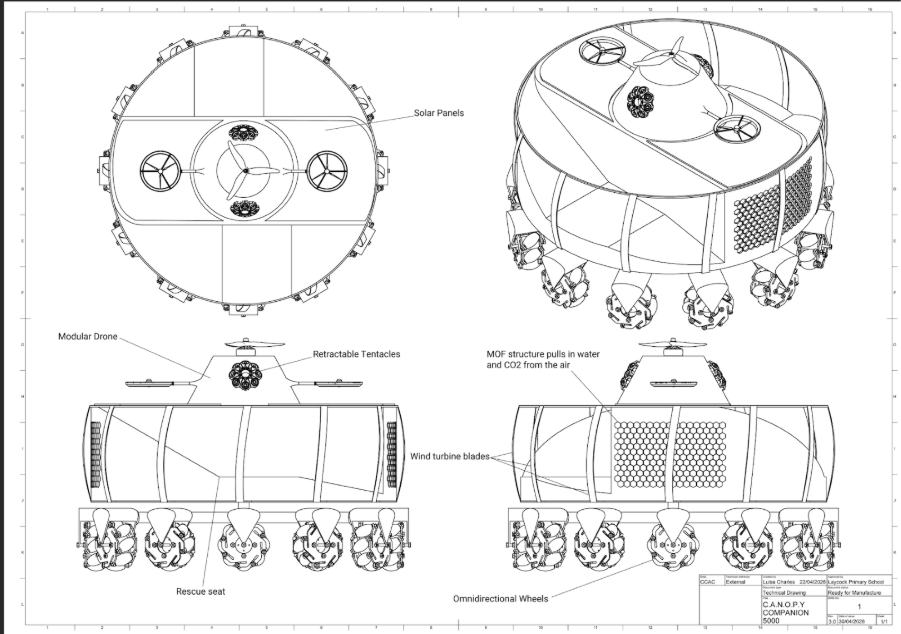
Luisa Charles’ diagram of the C.A.N.O.P.Y. Companion 5000
The Year 5 children at Laycock Primary absolutely excelled throughout this brief, proving themselves to be capable eco-engineers envisaging a resilient future.